Electric Gate Opener Installation: What to Expect From Planning to Operation
If your driveway gate quit working this morning, or your HOA board just approved an automated entrance, you are probably weighing the same question: what does electric gate opener installation actually involve, and what should a good installer handle from start to finish? Most of what ranks online is product pages for opener kits. This article covers the other side, the installation itself, from the first site visit to the day you hand out remotes.
Here are eight things to expect and evaluate before anyone mounts a motor on your gate, written for Mansfield and the surrounding North Texas area.
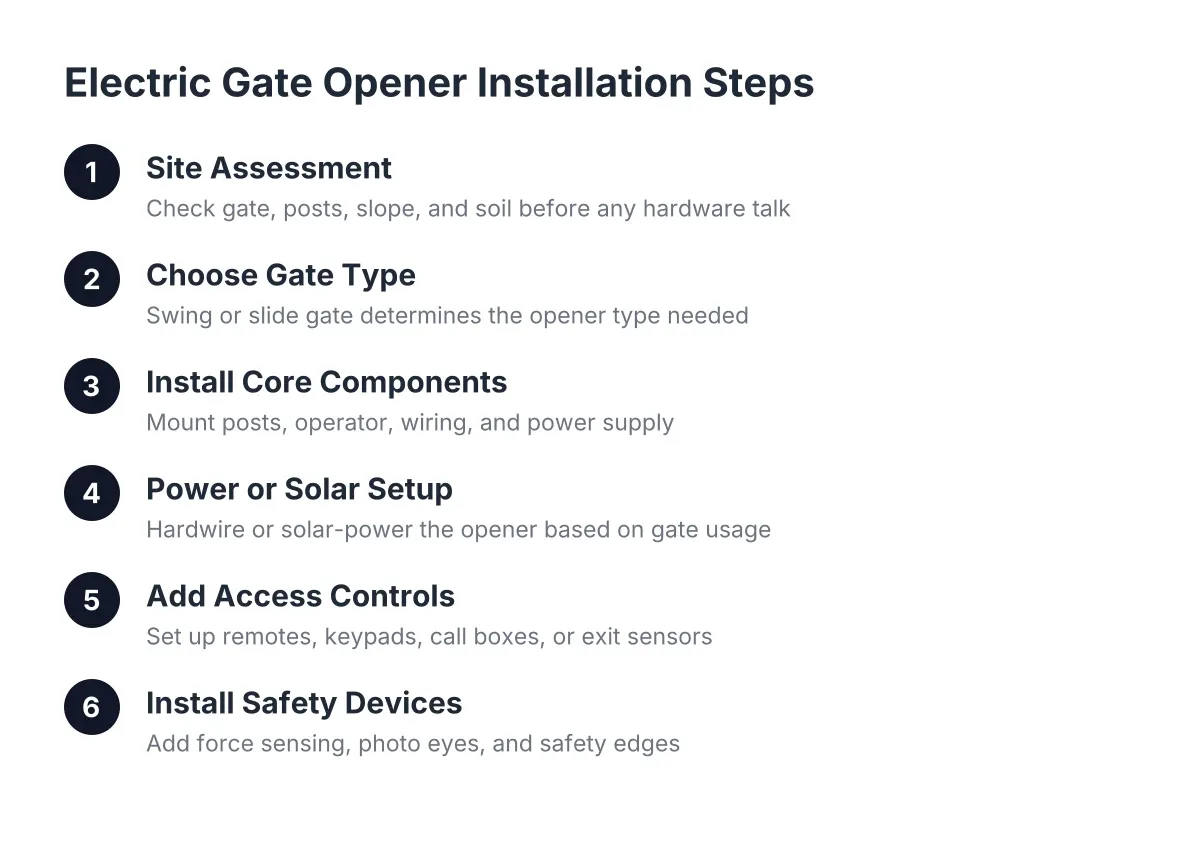
1. A Site Assessment Comes Before Any Hardware Talk
A good installer looks at your gate, posts, and driveway slope before recommending any electric gate opener. The opener is only as reliable as the gate it moves, so the first visit should focus on whether the existing gate swings freely, whether the posts are plumb, and whether the ground can support an operator.
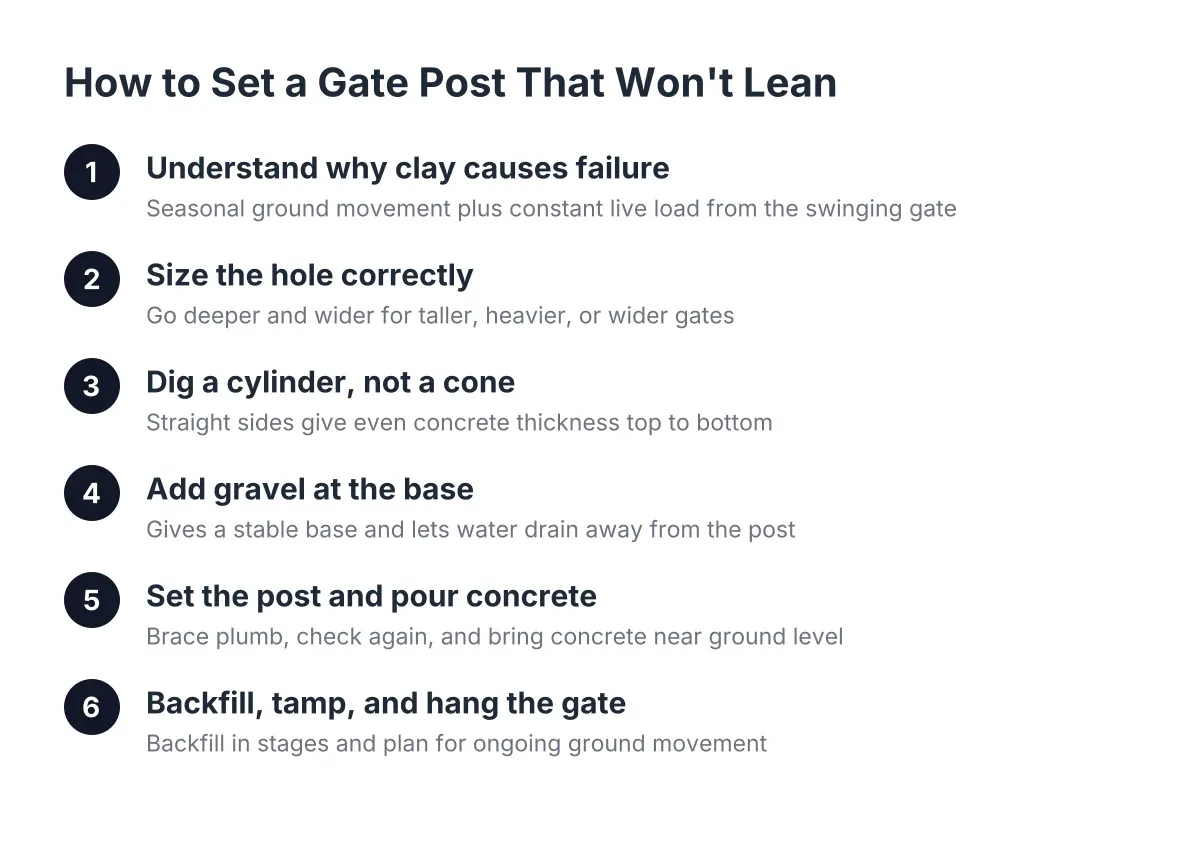
This matters in Mansfield specifically. North Texas clay soils swell and shrink with seasonal moisture, and that movement stresses gate posts over time. A gate that dragged slightly last year may bind hard this year because the post leaned. Bolting a motor to a binding gate burns out the motor; it does not fix the gate.
Expect the installer to check post condition, hinge wear, gate weight and balance, and the path the gate travels. If they skip straight to selling you an opener kit, that is a warning sign.
2. Swing or Slide: The Gate Type Decides the Opener Type
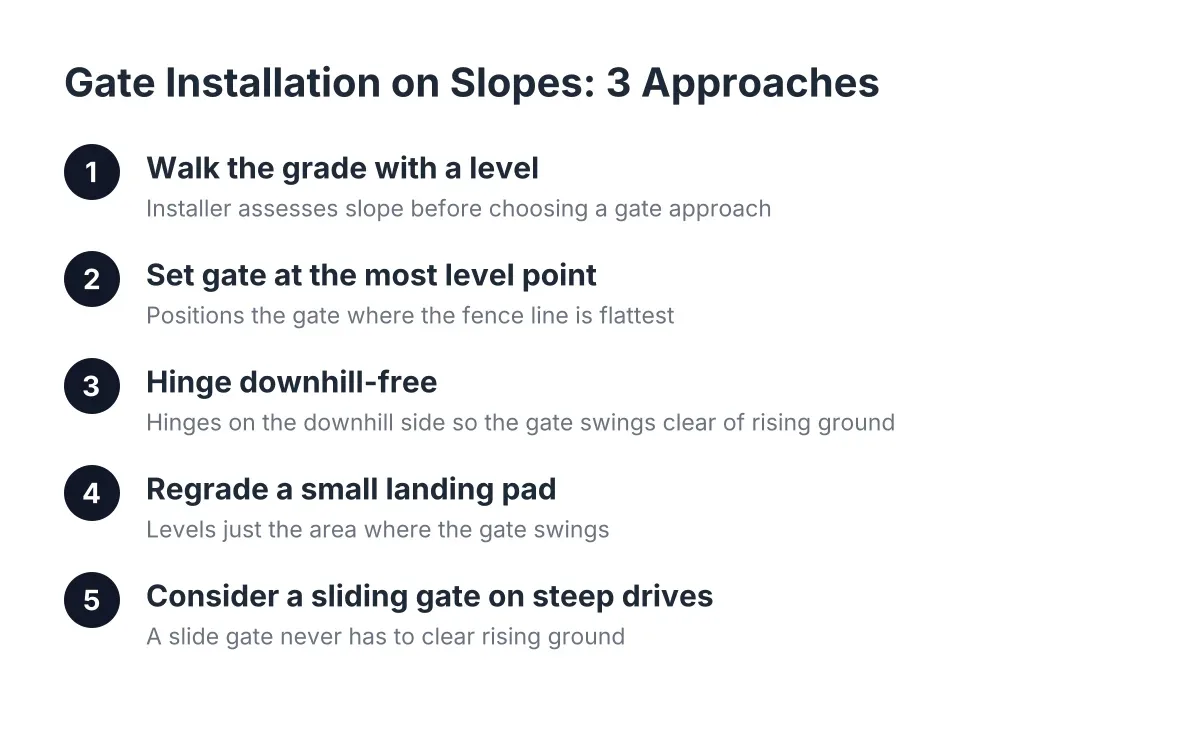
Electric gate openers for driveways come in two main families, swing gate operators and slide gate operators, and your site usually makes the choice for you. Swing gates need clear room to arc open without hitting a slope, a parked car, or a fence line. Slide gates need level run-off space along the fence for the gate to travel.
For a typical Mansfield home driveway, a swing gate is the common pick. For an HOA entrance with limited depth before the street, a slide gate often works better because cars do not have to wait behind a swinging panel.
Consider these trade-offs:
- Swing gates are usually simpler and cost less to automate, but they struggle on sloped driveways.
- Slide gates handle slopes and tight entrances well, but they need track or cantilever hardware and more maintenance.
- Dual swing gates split the weight across two operators, which helps with wide entrances.
3. What a Complete Electric Gate Opener Installation Includes
A full installation covers more than mounting a motor. The scope of work should include the operator itself, mounting posts or pads, power supply, safety devices, access controls, and testing. For an automatic gate opener on a residential driveway, that typically means:
- Setting or reinforcing the gate posts so they can carry both the gate and the operator loads
- Mounting and wiring the operator, either hardwired or solar powered
- Installing safety features such as obstruction sensing, photo eyes, or safety edges
- Setting up access controls: remotes, a keypad, a vehicle exit sensor, or a call box
- Programming open and close limits, auto-close timing, and force settings
- A full walkthrough so you know how to operate it and release it manually during a power outage
Items that are often extra include trenching long runs for power, repairing or rebuilding a failing gate, adding video intercoms, and integrating with HOA access management software. Ask for the line items so you can compare bids fairly.
4. Power, Solar, and the Wiring Question
Every electric gate opener needs power, and how it gets there drives a real share of the project cost. If your gate sits far from the house or the nearest panel, trenching conduit across a yard or under a driveway adds labor. That is why some Mansfield homeowners choose a solar electric gate opener instead, which pairs a panel with a battery and skips the long trench.
Solar works well in North Texas sun, but it has limits. High-traffic entrances, heavy gates, and gates that cycle constantly can outrun what a small solar setup recharges in a day. For an HOA community gate that opens hundreds of times daily, hardwired power with battery backup is the more dependable route.
A good installer will ask how often the gate cycles before recommending either option. If they do not ask, they are guessing.
5. Access Controls: Remotes, Keypads, and Who Gets In
Plan your access controls before installation day, not after. A basic residential setup uses an electric gate opener remote for each driver plus a keypad for guests and deliveries. An HOA or multi-unit property usually needs more: resident remotes or transmitters, a directory call box, and a way to add and remove users when tenants move.
For example, suppose a property manager oversees a gated community where the previous vendor installed a keypad with one shared code. Every former tenant, delivery driver, and landscaper still knows it. In that scenario, the fix during opener installation is a system with individual codes or credentials that the manager can revoke one at a time.
Also think about emergency access. Fire departments generally need a way in, whether that is a knox-style switch, a siren sensor, or a lockbox. Your installer should raise this; if they do not, bring it up.
6. Safety Devices Are Not Optional on an Automatic Gate
An automated gate is a moving machine that can weigh several hundred pounds, so obstruction detection matters. Modern operators include force sensing that reverses the gate when it meets resistance, and most professional installations add photo eyes that stop the gate if a car or person crosses the beam while it closes.
This is one of the strongest arguments for professional installation over a DIY driveway gate opener kit. The kit may work on day one. The difference shows up in how the safety devices are placed, wired, and tested, especially on community gates where children walk through and liability lands on the HOA.
One honest limitation: no safety system replaces maintenance. Sensors drift out of alignment, and force settings need rechecking as hinges wear and seasons change the gate's balance. Budget for periodic service, not just the install.
7. What Installation Costs Depend On, Without Invented Numbers
The cost of an electric gate opener installation depends on a short list of drivers, not a mystery formula. Rather than quote figures that will not match your site, here is what moves the price up or down:
- Gate condition. Automating a solid existing gate costs far less than rebuilding posts or the gate first. In Mansfield's shifting clay, post repair is a common add before automation makes sense.
- Operator class. Light residential swing operators cost less than commercial slide operators rated for constant HOA traffic.
- Power run. Short wiring runs are cheap; long trenches or solar kits add cost.
- Access controls. One remote is simple. A keypad, call box, exit loop, and camera stack up.
- Site conditions. Slopes, drainage issues, and tight clearances add labor.
For context on the broader market, the global automatic gate opening system market was estimated at $2.8 billion in 2025, according to Research and Markets, so there is a wide range of equipment at every price tier. A fair quote itemizes the operator, hardware, electrical work, access devices, and labor separately so you can see where the money goes. If your project includes new fencing alongside gate installation, ask the contractor to break that out as well, since fence footage and gate automation are priced on different logic.
8. Repair or Replace: What to Do When an Existing Opener Fails
If your gate is stuck open or the motor grinds, you do not automatically need a full replacement. Many failures trace to fixable causes: a dead battery backup, misaligned photo eyes, a worn gear, a failed circuit board after a storm, or a gate that binds because a post moved. A company that handles both gates and openers can tell you which problem you have.
However, replacement makes sense in a few cases. If the operator brand is obsolete and parts are unavailable, if the motor is undersized for the gate's weight and keeps burning out, or if the gate structure itself is failing, repairs become money spent twice. A straight answer sounds like this: here is what failed, here is the repair cost, here is the replacement cost, and here is why one makes more sense.
Watch for the warning signs that mean call a pro now rather than later: a gate stuck open on a property you need to secure, a gate that reverses randomly, grinding or slipping sounds, or any gate that closed on a vehicle or person. Those are not wait-and-see problems.
How Long Does Electric Gate Opener Installation Take?
Most residential electric gate opener installations finish in a day or two once the gate and posts are sound and power is available at the gate. The timeline stretches when the project includes trenching a long power run, setting new posts in concrete that must cure, or rebuilding a damaged gate before automation.
For HOA and community entrances, expect a longer runway. Commercial operators, call boxes, and access control programming add scope, and board approval cycles often shape the schedule more than the fieldwork does. As of 2026, equipment lead times for some commercial operators can also affect scheduling, so ask your installer what is in stock before you commit to a date.
Permits are worth a quick call too. Requirements vary by city and by project scope, so check with the City of Mansfield before adding an automated gate, especially on a commercial or community entrance.
Choosing an Installer: Three Questions That Sort the Field
Before you sign anything, ask these three questions and listen for specific answers:
- Do you service what you install, including the electronics? Many handymen will not touch gate motors. You want a company that handles the opener, the gate, and the fence it hangs on, so one call covers the whole system.
- How will you handle our soil and site conditions? In Mansfield, that means an answer about clay movement, post depth and footing, and drainage at the gate line, not a shrug.
- What exactly is in the quote? A fair bid lists the operator model, safety devices, access controls, electrical work, and labor as separate lines. Vague lump sums make bid comparison impossible, which matters if you are a property manager collecting competitive bids for a board vote.
The right answer to all three is plain and specific. Anyone selling urgency instead of detail is selling something else.
Get a Straight Answer on Your Gate
Whether you are automating a new driveway gate, scrambling to fix one that quit this morning, or planning a community entrance upgrade for next budget cycle, the process is the same: assess the gate, size the operator, plan power and access, and install safety devices that actually get tested. Mansfield TX Fence Pros installs and repairs gates and fences across Mansfield and explains the cost drivers upfront, without invented numbers or pressure. Reach out to walk through your site and get a clear, itemized estimate for your gate.
If you need gate installation, Mansfield TX Fence Pros can help.
Prefer to talk it through? Call (817) 383-9360 — a quick call is usually the fastest way to get a straight answer for your situation.