Hidden Costs of Gate Installation in Mansfield: Permits, Site Prep, and Clay Soil
A gate quote that looks clean on paper can grow once the crew starts digging. The hidden costs of gate installation usually come from three places: permits and approvals you did not know you needed, site prep the quote never mentioned, and posts that settle in North Texas clay soil until the gate drags or will not latch. This list walks through the cost drivers that surprise Mansfield homeowners most often, so you can ask the right questions before you sign anything. Understanding hidden gate installation costs before the project starts prevents budget arguments later.
This matters whether you are replacing a gate that failed last week or planning new fencing around a pool project. A stuck gate you cannot secure and a pool permit that requires code-compliant fencing both put you on a clock. Rushing past these line items is how a reasonable budget turns into an argument with your contractor.
1. Permits and HOA Approvals You Did Not Budget For
Permit and approval costs hide in plain sight because most homeowners assume a gate is too small to need paperwork. Depending on where your gate sits, what it attaches to, and whether it is part of a larger fence project, the city or your HOA may want a say. Skipping that step can mean tearing out finished work, which costs far more than the permit ever would.
There is one piece of good news for repair work. Mansfield's building code exempts replacement or repair of an existing wood privacy fence from permitting when the work covers less than 50% of the total linear footage of fencing on the property, according to the City of Mansfield, Texas. However, a new driveway gate, a pool enclosure, or a fence line in a new location is a different conversation. Pool projects in particular carry code requirements for self-closing, self-latching gates, and failing inspection means paying twice for hardware.
HOA review is the quieter cost. Some associations require specific materials, heights, or stain colors, and an approval cycle can add weeks to your timeline even when it adds no direct fee.
2. Site Prep and Hidden Gate Installation Costs: What to Expect Before the Crew Arrives
Site prep is the gap between the gate price and the project price. A quote that covers the gate, the hinges, and two posts assumes the ground is ready. In practice, the crew may find an old concrete footing from a previous fence, tree roots in the post line, or a grade change that forces a custom gate height.
Buried obstructions are common on established lots. Old post concrete or construction debris near the surface can turn a one-hour dig into a half-day job that needs heavier tools, and that extra labor lands on your invoice as a change order. If your yard had a fence before, assume at least one old footing sits where the new gate post wants to go.
Ask your fence company to walk the gate location before quoting, not just measure from the street. A contractor who probes the post locations in advance can price the dig honestly instead of surprising you mid-project.
3. Post Settling in North Texas Clay: The Cost That Shows Up Later
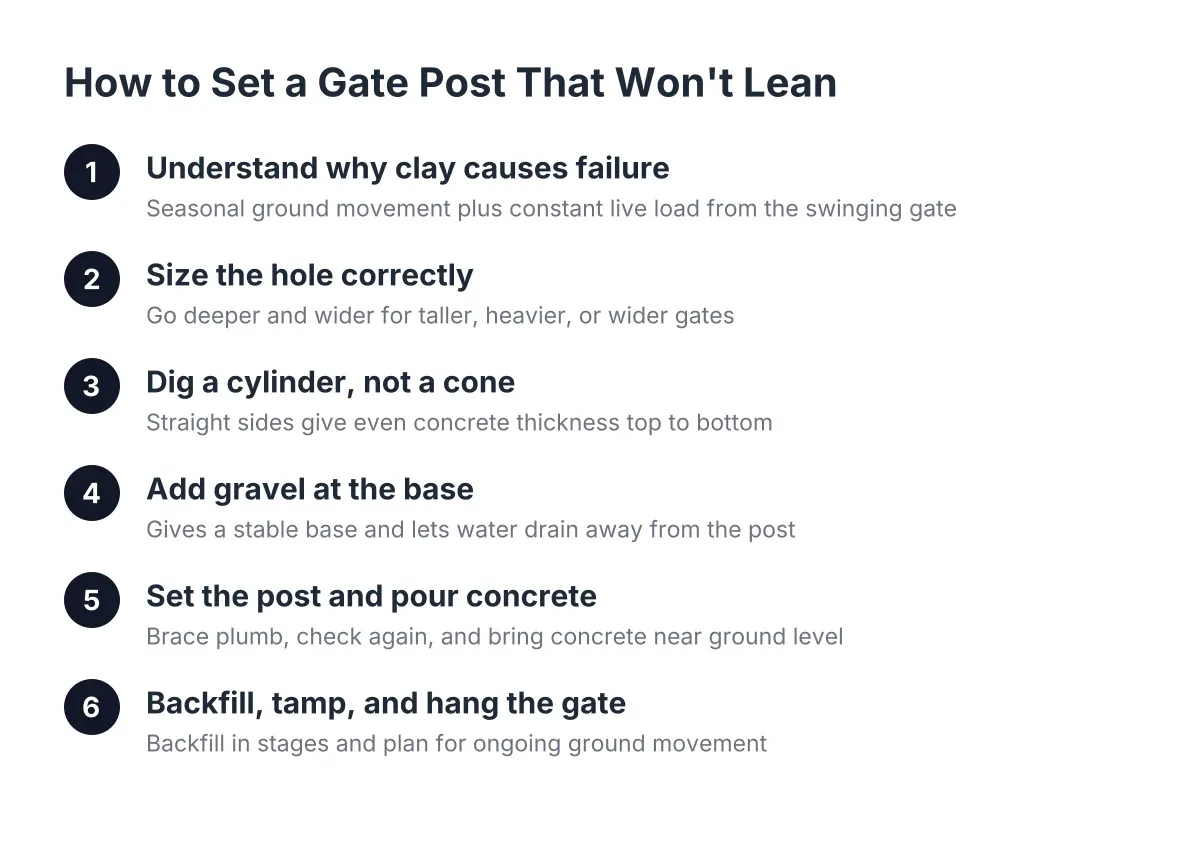
Clay soil settling is the hidden cost that does not appear on any invoice, because it bills you a year later. North Texas clay swells when seasonal rain soaks it and shrinks hard in summer heat. That movement works on gate posts more than fence posts, because a gate post carries the swinging weight of the gate on one side.
The result is familiar to anyone searching for gate repair: a gate that latched fine in April drags the ground by August, or a driveway gate that no longer meets its striker. Fixing a leaning gate post often means digging out the footing and resetting it, which can cost a meaningful share of the original installation.
The prevention is in the footing details. Proper depth, a gravel base for drainage, and concrete finished correctly at grade all resist clay movement. A common shortcut is stopping the concrete a couple inches below grade and backfilling with dirt, which traps moisture right where the post meets the ground and creates the most common failure point. Cheap installs cut exactly these corners, which is why the lowest bid often costs more over the life of the gate.
4. Hardware Upgrades the Base Quote Leaves Out
Gate hardware is where a low quote quietly stays low. Base quotes often include light-duty hinges and a basic latch. For a heavy cedar gate or a wide driveway gate, those parts wear out fast, and replacing sagged hinges on a gate that no longer hangs square is a repair call waiting to happen.
Here is a detail that separates careful installers from fast ones. Setting the latch striker near the top of its adjustment range anticipates ground movement, so the gate keeps latching as the soil shifts over seasons. On vinyl gates, reinforcing the uprights so screws hold firmly makes the frame far more resistant to failure. Neither upgrade is expensive upfront; both are expensive to retrofit.
When you compare quotes, ask each fence company to list the hinge type, latch type, and any frame reinforcement by name. If one quote is cheaper and the hardware section is vague, you have likely found where the savings came from.
5. Electrical and Automation Costs on Driveway Gates
Automation roughly changes the project category. An automatic driveway gate needs power at the gate, safety sensors, and an opener sized for the gate's weight and the wind load it will catch. If no power runs to that corner of your property, trenching conduit from the house can rival the cost of the gate itself.
Demand for these systems is real; the global automatic gate opening system market was estimated at $2.8 billion in 2025, according to Research and Markets. That scale means plenty of opener options, but also plenty of underpowered budget units. An opener that strains against a heavy gate grinds itself down, which is how homeowners end up searching "electric gate not working" two summers after install.
Budget lines to ask about before you sign:
- Trenching and conduit from your electrical panel to the gate
- Battery backup so the gate works during an outage
- Safety sensors and auto-reverse, which pool and driveway gates need
- A surge path for the control board, since storms take out boards regularly
- Keypad, remote, or phone access, each priced separately
6. Matching the Gate to a Pool or Backyard Remodel
Material matching is a cost most remodelers discover late. Suppose a homeowner finishes a pool and travertine patio, then realizes the old stockade fence and its sagging gate now look wrong against the new hardscape. Upgrading to a cedar privacy fence, vinyl fence, or concrete fence section with a matching gate is a bigger line item than the original fencing budget assumed.
Material prices also move. Concrete costs rose 6.7% year-over-year even after a slight dip at the start of 2025, according to Gordian, so a concrete fence or footing-heavy gate project quoted last year may not hold its price in 2026. Lock in current numbers rather than relying on an old estimate.
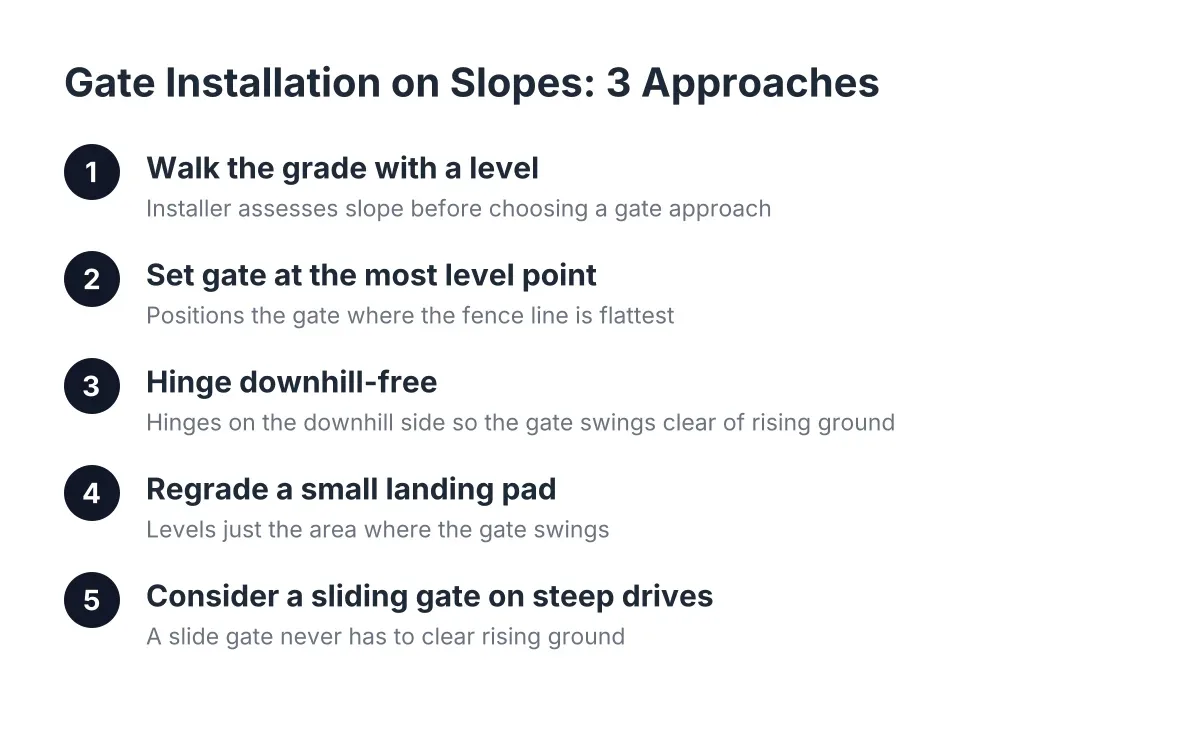
Timing the gate installation with the rest of the remodel saves money too. If the pool contractor's crew is already trenching for gas or electrical, sharing that trench for gate power is cheaper than opening the yard twice. Coordinate the schedule so fencing goes in after heavy equipment leaves, or you will pay to repair crushed panels.
7. Repair or Replace: When a Broken Gate Hides the Real Cost
Repair-versus-replace is the decision where hidden costs cut both ways. If your gate is stuck open this morning and you cannot secure the property, the cheapest fix is tempting. However, paying to rehang a gate on a post that clay movement has already tilted means paying again next season.
A fair rule of thumb: if the gate frame is square and the post is plumb, hardware repair usually makes sense. If the post leans or the footing has heaved, a repair on top of a failing foundation is money spent twice. A trustworthy contractor should show you the post condition, not just tell you, so you can see whether replacement is a real need or an upsell.
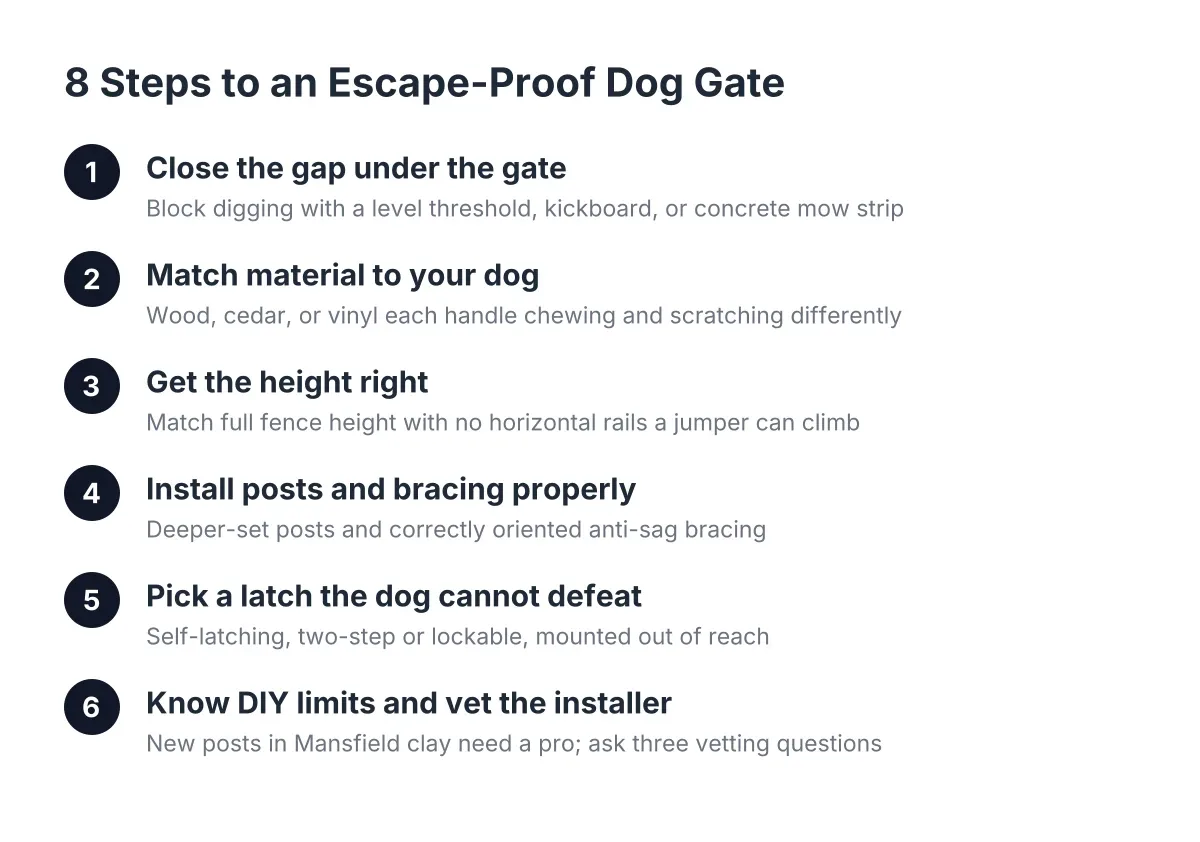
Fence companies vary in what they service. Some handle wood and panels only; others also install and troubleshoot gate openers. Ask directly whether the company works on your gate type, including electronics, before they roll a truck.
How Do You Avoid the Hidden Costs of Gate Installation?
You avoid hidden gate installation costs by getting them named before the contract is signed. Ask every bidder to put permits, site prep, footing depth, hardware brands, and electrical work in writing as separate line items. A quote that itemizes these is comparable; a single lump number is a guess you are agreeing to pay.
Context helps you judge the numbers. The average cost to install a fence runs about $23 per linear foot, with a typical range of $6 to $50 depending on material and labor, according to HomeAdvisor. Gates cost more per foot than fence runs because of the posts, footings, and hardware, so a gate line item that looks expensive next to the fence footage is not automatically padded.
A short checklist for comparing bids:
- Does the quote state who pulls permits and handles HOA paperwork?
- Is site prep included, or billed as a change order if the dig gets hard?
- What is the footing depth, and does it account for clay soil movement?
- Are hinges, latches, and any opener listed by brand and model?
- Who services the gate if it fails after installation?
One honest caution: no installer can promise that North Texas clay will never move a post, and anyone who guarantees zero settling is overselling. What good installation buys you is a footing built for that movement and hardware set with adjustment room, so seasonal shifts become a latch tweak instead of a rebuild. For gates near pools, retaining walls, or significant slopes, have a professional evaluate the site before you commit; those conditions change the right answer.
The pattern across all seven items is the same. The hidden costs in a gate project are rarely hidden from the contractor; they are just left out of the conversation. Make the conversation happen first, and the number you agree to is the number you pay.
If you need gate installation, Mansfield TX Fence Pros can help.
Prefer to talk it through? Call (817) 383-9360 — a quick call is usually the fastest way to get a straight answer for your situation.