Gate Installation Timeline: How Long Professional Installation Actually Takes
If you are asking why the gate installation timeline runs long on some jobs and short on others, the honest answer is that the gate itself is the fast part. Hanging a gate takes hours. What stretches the schedule is everything underneath it: North Texas clay soil, post curing time, slope, and whether the gate ties into a bigger project like a pool fence or a backyard remodel. This guide walks through the timeline step by step, so you know what happens on which day and why skipping a step costs you a leaning gate within a couple of seasons.
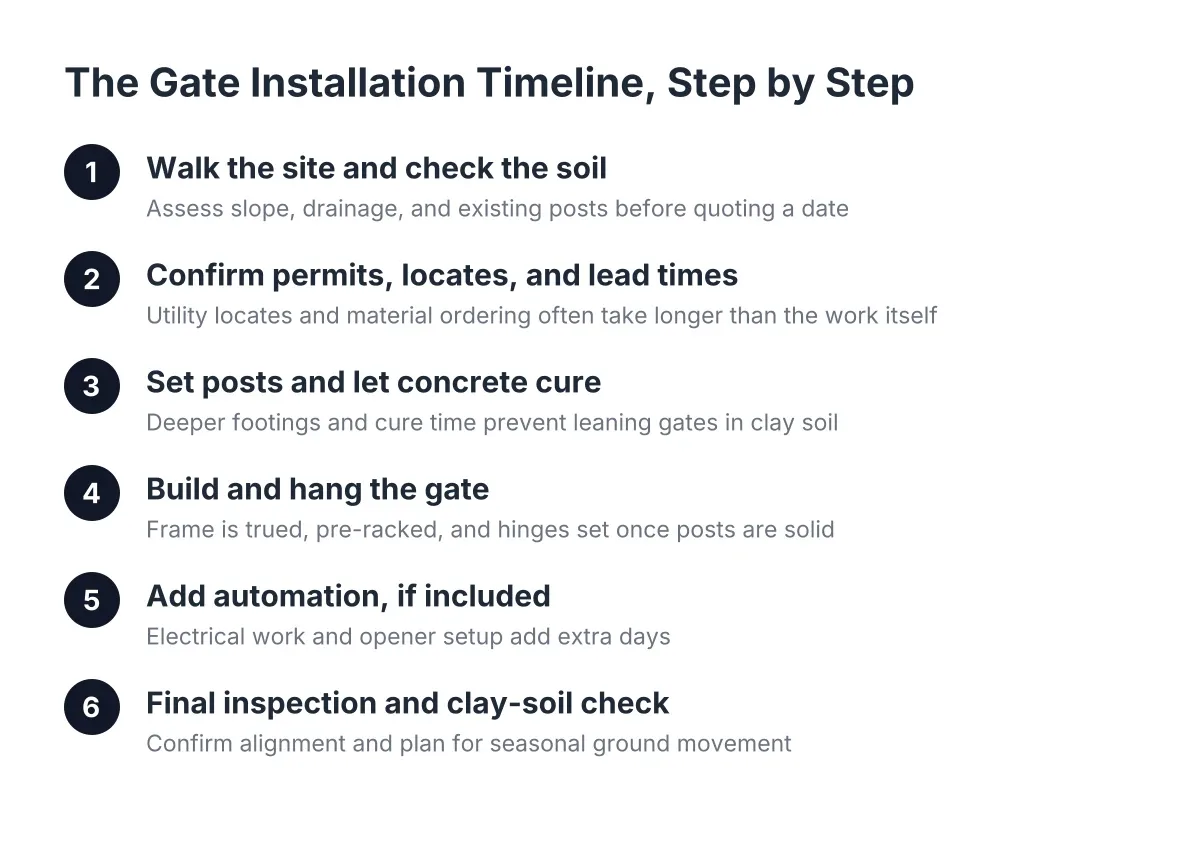
Here is the short version. A simple walk gate in an existing wood fence can be done in a day once posts are ready. A new driveway gate with fresh posts in Mansfield clay usually spans several days because concrete footings need time to cure before the gate carries weight. An automatic gate adds more days for electrical work and opener setup. The steps below break down where each of those days goes.
Step 1: Walk the Site and Check the Soil Before Anyone Quotes a Date
Start with a site visit, not a calendar. The single biggest factor in how long gate installation takes in Mansfield is what the ground is doing at the exact spot where the posts will sit. Clay soil here swells when it rains and shrinks hard in summer heat. That seasonal movement is why fence posts lean and gates sag out of alignment.
During the walkthrough, a good installer checks three things:
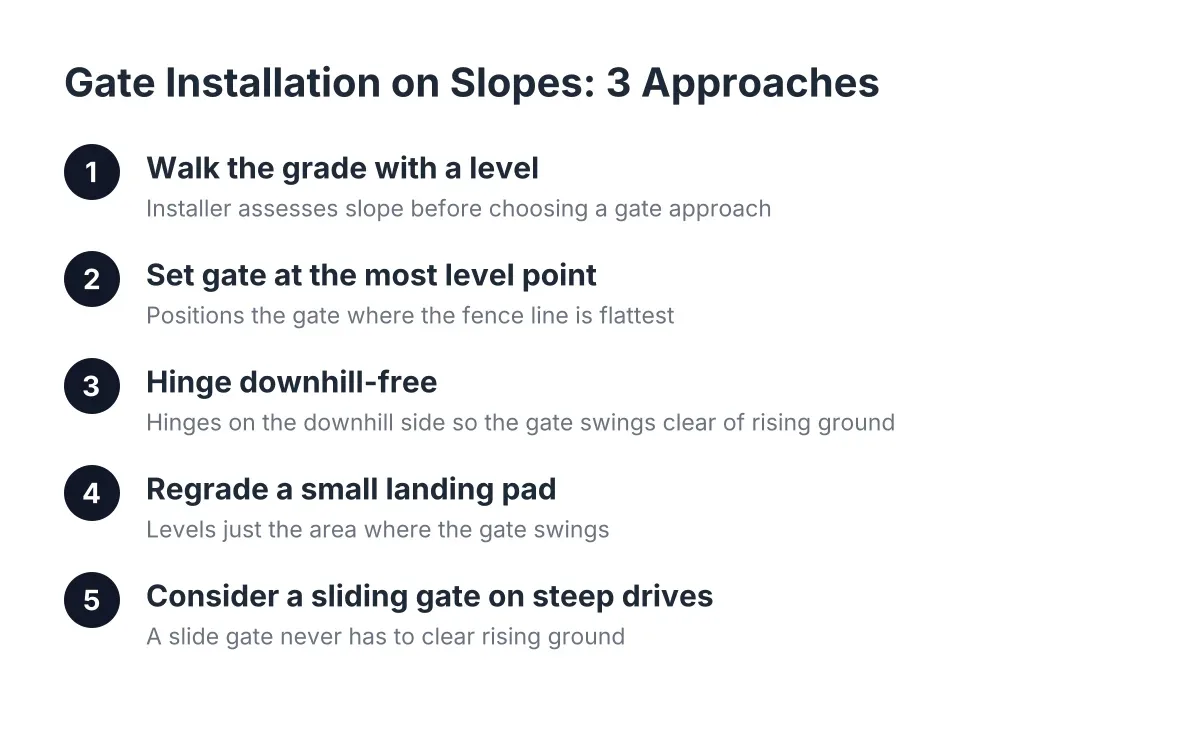
- Slope at the gate opening. A gate needs room to swing clear of rising ground. On a sloped yard, the installer may recommend a rolling gate, a stepped fence line, or extra ground clearance, and each choice changes the schedule.
- Drainage. If water pools where the posts go, expect a conversation about deeper footings or regrading before the gate goes in. That adds days, but it is cheaper than resetting heaved posts next spring.
- What the posts attach to. A gate hung on an existing fence post that was never built to carry gate weight will pull that post over. If the existing post is marginal, plan on replacing it, which adds a dig, a pour, and cure time.
If you are mid-remodel with a pool going in, this visit is also where fence and gate work gets sequenced around the pool contractor. Pool code requires self-closing, self-latching gates, and the inspector will check them, so the gate cannot be an afterthought bolted on the last day.
Step 2: Confirm Permits, Utility Locates, and Material Lead Times
Next, handle the paperwork and the waiting that happens before a shovel touches dirt. This is the invisible part of the timeline, and it often takes longer than the physical work.
Utility locates come first. Gate posts go deep, and nobody digs near a gas or electric line without marked utilities. Build a few business days into your plan for the locate service.
Permits depend on scope. As a reference point, the City of Mansfield building code exempts replacement or repair of an existing wood privacy fence from permitting when the work covers less than half of the total linear footage of fencing on the property. New construction, pool enclosure fencing, and larger projects are a different matter, so confirm requirements for your specific job in 2026 rather than assuming.
Materials matter too. Standard cedar and wood gates are usually quick to source. A custom-width driveway gate, matching vinyl panels for a new fence, or precast concrete fence sections can carry lead times of days to weeks. Order before demolition, not after, or your yard sits open while you wait.
Step 3: Set the Posts and Let the Concrete Cure (the Step Nobody Wants to Wait For)
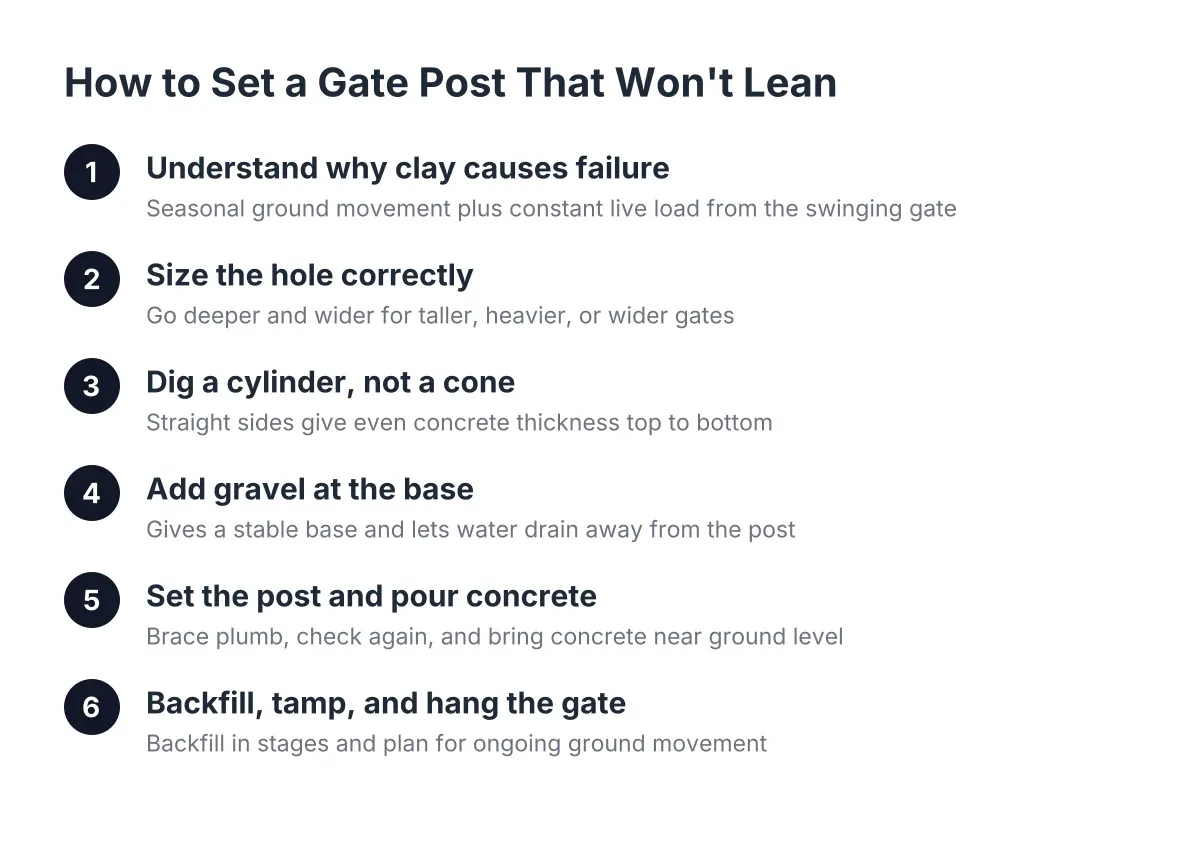
This is where the gate installation timeline gets long, and it is the step most worth protecting. Gate posts carry constant leveraged weight, which fence posts do not. In shifting clay, that means deeper footings, more concrete, and sometimes a reinforced post, such as a steel pipe that a vinyl post sleeves over, in tight or difficult spots.
Dig day itself is fast on cooperative ground. On rocky spots, near tree roots, or where an old footing has to come out, it slows down. On some sites, core drilling through hard material is the right call; it adds equipment and time, but it is what keeps the post plumb for the long haul.
Then comes the cure. Concrete needs time to gain strength before the posts take hinge load. Hanging a heavy driveway gate on green concrete is how gates end up dragging within a year. A typical crew pours posts on one visit and returns on a later day to hang the gate. If a contractor offers to dig, pour, and hang a heavy gate in one afternoon, ask how the footing will hold when the clay moves in August.
For the slope skeptic reading this: yes, this step is where quotes grow. Deeper footings, core drilling, or a small retaining section at the gate opening all add cost. However, they are line items you can see and question at the quote stage, not surprises. Ask the installer to explain why each one is needed on your lot. An honest answer references your slope and drainage, not a generic upsell.
Step 4: Build and Hang the Gate
Once the posts are solid, the carpentry moves quickly. For a wood or cedar gate, the installer builds or trues the gate frame, pre-racks it square, and temporarily fastens the hinges so the gate holds its correct shape before final hanging. A useful trick of the trade is setting the latch striker first; it gives the gate a fixed target and makes final alignment faster and more accurate.
Vinyl gates get their own reinforcement step. A quality install adds internal stiffening inside the gate uprights so the hinge and latch screws bite into something stronger than hollow vinyl. It takes a little longer on install day and pays off every time the gate slams in a March wind.
Expect this phase to take part of a day for a standard walk gate and a full day or more for a wide driveway gate, double gates, or a gate matched to new pool fencing where latch height and self-closing hardware have to meet code.
Step 5: Add Automation, If the Project Includes It
An automatic gate extends the schedule past the hang date. The opener needs power, which can mean trenching for electrical, coordinating an electrician, or installing a solar setup. Then the operator gets mounted, programmed, and tested with safety sensors.
For example, say a homeowner on a half-acre lot off Lone Star Road is finishing a pool remodel and wants an automated driveway gate to match. In that hypothetical scenario, the realistic sequence is: site visit and locates in week one, posts set and curing in week two, gate hung a few days later, and the opener wired and commissioned on a final visit. The gate itself took a day. The project took weeks, and every one of those days had a reason.
Automation is also worth a candid trade-off note. Openers add moving parts, electronics, and maintenance that a manual gate never needs. If the gate gets used twice a day, weigh whether the convenience justifies the added install time and upkeep.
Step 6: Walk the Final Inspection and Plan for Clay-Soil Movement
Finish with a walkthrough before the crew leaves. Swing the gate through its full arc. Check that it latches without lifting or shoving. On pool projects, confirm the self-closing hinges and latch placement satisfy the inspector, since a failed gate check stalls the whole pool sign-off.
Then plan for movement, because in Mansfield the ground will move. One practical detail: on soils that settle or shift, placing the latch striker near the top of its adjustment range leaves room for the gate to keep latching as the ground changes under it. Expect to adjust hinges or the latch after the first full wet-dry cycle; that is normal maintenance, not a failed install.
Why a Longer Gate Installation Timeline Usually Means a Longer-Lasting Gate
A long installation timeline is usually a sign the installer respected the ground, not a sign of a slow crew. Cure time, deeper footings, and a return visit to hang the gate are what keep it swinging straight through year five instead of sagging by year two. The cheapest, fastest install often becomes the most expensive one once you pay to rebuild it.
Cost pressure is real on a remodel budget, and it is tempting to compress the schedule. Fence and gate work tied to a pool or patio project competes with every other trade for money and calendar space. For broader context, HomeAdvisor reports the average cost to install a fence is $23 per linear foot, with a typical range of $6 to $50 depending on material and labor; gates sit on top of that as their own line item driven by size, material, hardware, and site conditions.
When to Bring in a Professional Early
If your lot slopes noticeably at the gate location, if a previous fence or gate failed within a few years, or if the gate is part of a permitted pool enclosure, get a professional assessment before you commit to a schedule. Complex grading, retaining needs, and code-compliant pool gates are places where a wrong guess costs far more than the consultation. A clear-eyed look at your soil and slope up front is what turns a long timeline into a predictable one.
If you need gate installation, Mansfield TX Fence Pros can help.
Prefer to talk it through? Call (817) 383-9360 — a quick call is usually the fastest way to get a straight answer for your situation.