Leaning Fence Post Repair in Mansfield Clay Soil: Causes, Fixes, and Prevention
If your wood fence started tilting after a wet spring, you are not alone. In Mansfield, leaning fence post repair is one of the most common fence repair calls, and the reason is usually underfoot: North Texas clay soil swells when it rains and shrinks hard in summer heat. That movement grips, shoves, and loosens posts over time. This guide walks you through fixing a leaning post step by step, explains why clay soil causes the problem in the first place, and shows you how to keep the repair from failing in two years.
This matters most if you are on a sloped lot, or if you are mid-remodel with a pool or patio project that just exposed a sagging fence line. A leaning fence next to brand-new hardscape looks bad, and a fence that cannot stand up straight will not meet pool barrier expectations either. Here is how to evaluate the problem and fix it right.
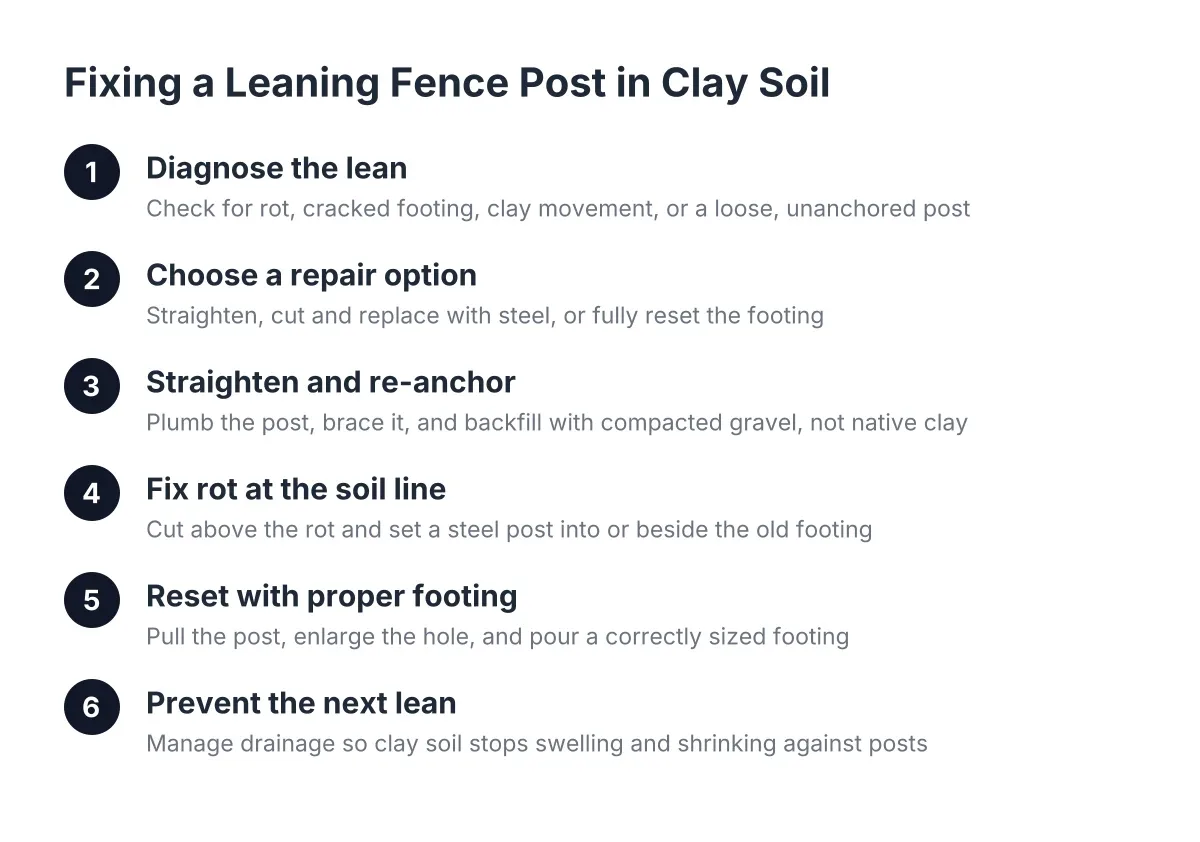
Diagnosing Why Your Fence Post Is Leaning: Step 1
Start at the base of the leaning post, not the top. The lean is a symptom; the cause lives at or below ground level. In Mansfield, you will almost always find one of four problems:
- Rot at ground level. The post is intact above grade and below grade, but soft and crumbling right where soil, moisture, and air meet. Push a screwdriver into the wood at the soil line. If it sinks in easily, the post has rotted.
- A cracked or undersized concrete footing. A post set in a skimpy footing can snap the concrete under lateral force, like a strong south wind on a solid privacy fence. The break becomes a wobble point, and the post rocks a little more with every gust.
- Clay soil movement. Expansive clay swells in wet seasons and shrinks in drought. On a sloped yard, water also runs along the fence line and saturates one side more than the other. Over several cycles, the soil loses its grip and the post heaves or tilts.
- A loose post with no real anchor. Some older fences were built with posts set in dirt or a token amount of concrete. Those posts lean as soon as the soil softens.
Grab the post and rock it. If the post flexes but the base stays planted, you likely have rot or a broken post. If the entire footing moves in the ground, the soil or the footing size is the problem. This distinction decides everything that follows.
Deciding on Repair Options: Bracing, Resetting, and Replacing a Leaning Fence Post
Can you fix a leaning fence post without replacing it? Often, yes. If the post is sound wood and the footing simply shifted in soft soil, you can usually straighten and re-anchor it. If the post has rotted at the soil line or the footing has cracked, straightening alone will not hold, and you need a structural repair or a new post.
Here is a plain decision rule:
- Solid post, shifted soil: straighten the post, then stabilize the footing (Step 3).
- Rotted post, intact concrete footing: cut the post above the rot and set a steel post into or against the original footing (Step 4). This is often cheaper than digging everything out.
- Broken footing or repeated failure: pull the post, enlarge the hole, and reset with a properly sized footing (Step 5).
- Several posts leaning along one run: stop patching one post at a time. Evaluate the whole line, because the same soil condition is working on every post.
A note on repair kits: a leaning fence post repair kit from a big-box store, usually a steel spike or bolt-on brace, can work as a short-term fix on a post that is still solid. On expansive clay, though, these kits treat the symptom. The soil keeps moving, and the brace eventually leans with everything else. Use them to buy time, not as the permanent answer.
Step 3: How to Straighten and Re-Anchor a Leaning Fence Post
If the post and footing are intact but tilted, your job is to plumb the post and give the soil something better to grab.
First, dig out the soil on the side the post is leaning toward, down alongside the footing. Do not dig under it. Next, push the post plumb and brace it with two diagonal 2x4s staked into the ground, set at right angles to each other. Check plumb on two faces with a level.
Then backfill the gap. On clay soil, resist the urge to just pack the native dirt back in; it will soften again with the next heavy rain. A better backfill is crushed stone or a gravel base compacted in layers, which drains water away from the post instead of holding it there. Water sitting against the post is what started this problem.
For example, suppose a homeowner on a sloped lot near a new pool deck has three posts leaning downhill after a rainy fall. The soil on the downhill side stays saturated because runoff from the new patio sheds toward the fence. In that scenario, straightening the posts without fixing the drainage means repeating this job next year. A gravel backfill plus a swale or drain line that moves water away from the fence line solves the actual cause.
Leave the braces on for several days so the backfill settles and the post holds its position.
Step 4: Fix a Post That Rotted at the Soil Line
A post rotted at ground level feels like a total loss, but it usually is not. The first instinct is to rip out the post and the concrete footing and start over. That is the hardest, slowest, most expensive path, and it is often unnecessary.
Instead, cut the post off above the deteriorated section. The original concrete footing is still doing its job in the ground, and a new steel post can be set into or alongside it, with the fence rails and pickets reattached to the steel. You keep the footing's anchoring strength and skip the brutal work of breaking out old concrete from clay soil.
There is a second benefit for anyone thinking long term. Old concrete footings left along a fence line help stabilize the surrounding soil. If you plan a full fence replacement in a few years, maybe timed with the rest of your backyard remodel, an interim steel-post repair keeps the fence standing now and feeds directly into that future rebuild instead of being money thrown away.
This is also where honest wood fence repair judgment matters. One rotted post is a repair. Rot at the soil line on post after post means the whole fence was built for a drier yard than you have, and you should price a replacement before spending more on patches.
Step 5: Resetting a Leaning Fence Post With Proper Footing
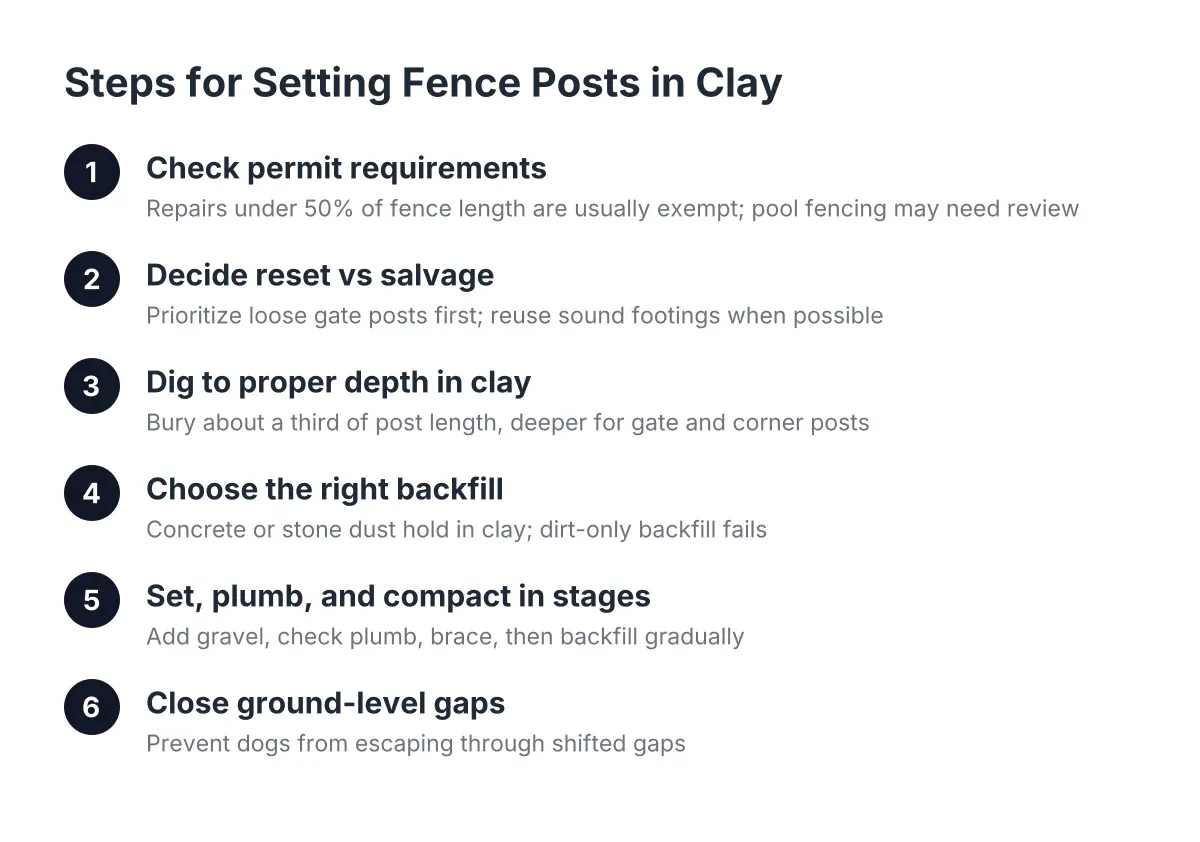
When the footing itself has failed, or there never was a real footing, pull the post and start the hole over. This is where most DIY leaning fence post repair goes wrong, so get the footing right.
Two misconceptions cause most failures:
- More concrete does not automatically mean a stronger post. A deep, narrow glob of concrete can still crack. What the post needs is a generous amount of concrete surrounding it on all sides, so lateral force spreads through the footing instead of snapping it.
- Concrete poured tight against wood can speed up rot. Concrete traps moisture against the post. A well-draining detail, like gravel at the base of the hole so water drains below the wood, keeps the post drier than concrete alone.
Dig the hole wider than feels necessary, keep the post centered so concrete surrounds it evenly, and crown the concrete at the surface so it sheds water away from the wood. On a sloped yard, backfill slightly higher on the downhill side so the top rail runs level even as the grade changes. That one adjustment is the difference between a fence that follows the land cleanly and one that looks stepped and sloppy.
In tight spots, say where your fence butts against a neighbor's fence or wraps around a mature tree, a reinforced post built from a metal pipe with a sleeve over it can carry the load where a standard wood post will not fit or hold.
Step 6: Prevent the Next Lean
Clay soil is not going away, so prevention is about managing water and choosing materials that tolerate movement.
- Control drainage. Keep sprinkler heads from soaking post bases. Direct downspouts and patio runoff away from the fence line. Saturated clay is what moves.
- Keep soil and mulch off the pickets and posts. Ground contact above the footing invites rot.
- Watch gates. Gate posts carry swinging weight and fail first. Sagging at the gate is often your earliest warning that posts are moving.
- Consider steel posts or concrete fencing for problem spots. If you are remodeling anyway, steel posts with cedar pickets, a vinyl fence, or a concrete fence handles Mansfield's moisture swings better than wood posts in the ground.
When to Call a Pro Instead of Doing It Yourself
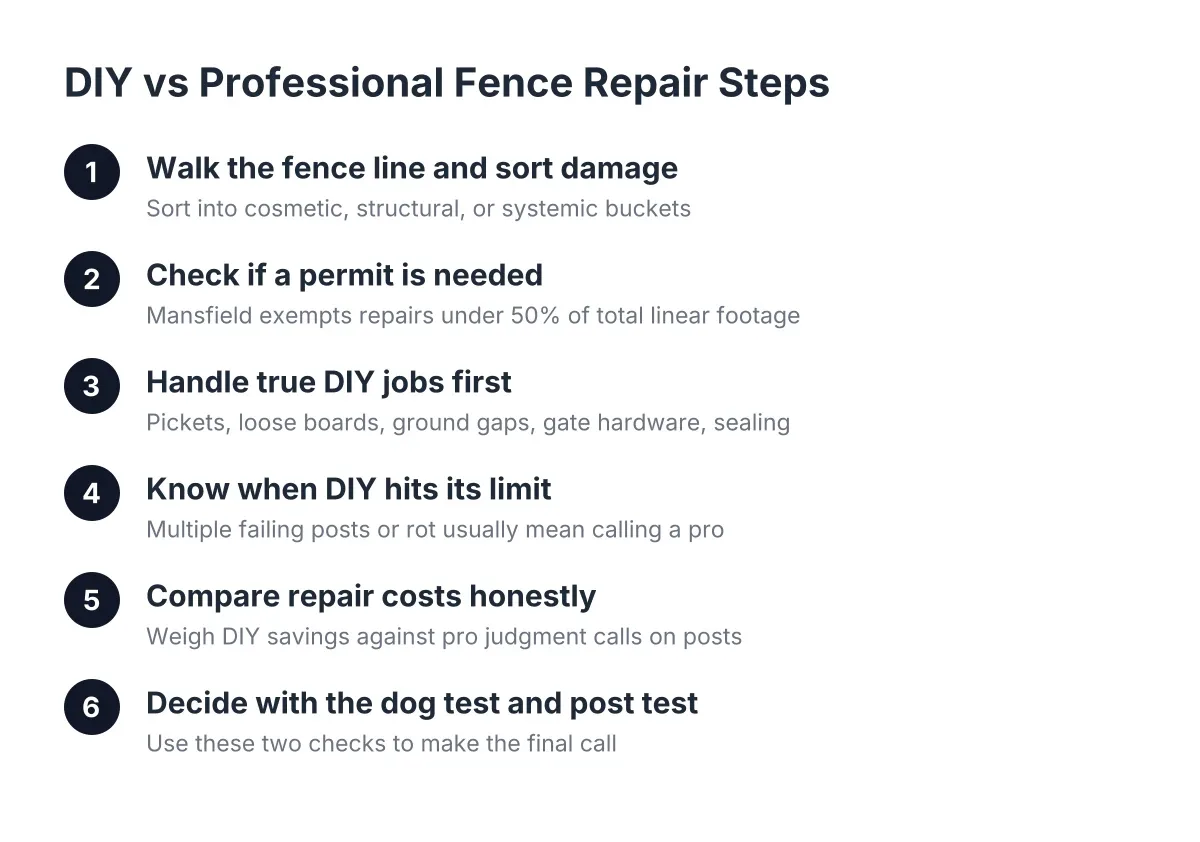
One leaning post on flat ground is a reasonable weekend project. Call a fence company when the problem is bigger than one post: multiple posts heaving on a slope, a fence line that needs core drilling through rock or old concrete, drainage that needs regrading, or a retaining situation where soil is pushing against the fence itself. Those jobs need an assessment of the ground, not just the fence, and getting it wrong means paying twice.
Searching for wood fence repair near me will turn up plenty of options; the useful question to ask any of them is what caused the lean, not just what the fix costs. A contractor who talks about drainage, footing size, and soil before quoting is solving your problem. One who only quotes a post swap is treating the symptom.
As for cost, repairing a leaning fence post depends on what you find at the base: a straighten-and-brace job is far less work than cutting out rot, setting steel, or resetting footings along a run. For a broader look at repair pricing factors, see our guide on wood fence repair costs.
One more practical note for Mansfield homeowners: the City of Mansfield, Texas exempts repair or replacement of an existing wood privacy fence from permitting when the work covers less than 50% of the total linear footage of fencing on the property. Most single-post and small-section repairs fall well under that line as of 2026, but confirm with the city if your project grows into a larger rebuild.
Fix the cause, size the footing for clay, and manage the water. Do those three things and your repaired fence should outlast the one that leaned.
If you need fence repair, Mansfield TX Fence Pros can help.
Prefer to talk it through? Call (817) 383-9360 — a quick call is usually the fastest way to get a straight answer for your situation.