Wood Fence Board Replacement: How to Fix Cracked, Splintered, and Warped Boards
Cracked pickets, splintered edges, and boards that have warped away from the rails are the most common wood fence problems in Mansfield. The good news is that wood fence board replacement is one of the most manageable fence repairs there is, whether you handle it yourself or hire a fence company. Fence picket replacement is a straightforward process when you walk through it step by step, with special attention to one detail that matters a lot if you own a dog: a repaired fence is only as good as its weakest board and its biggest gap.
That last point is not a small one. A dog-containment comparison study found escape rates of 23% for physical fences versus 44% for electronic fences, according to Starinsky, Lord, and Herron (2017), JAVMA. A physical fence works, but only when it is intact from top to bottom. Additionally, a single loose picket or a gap at the bottom can undo the whole thing.
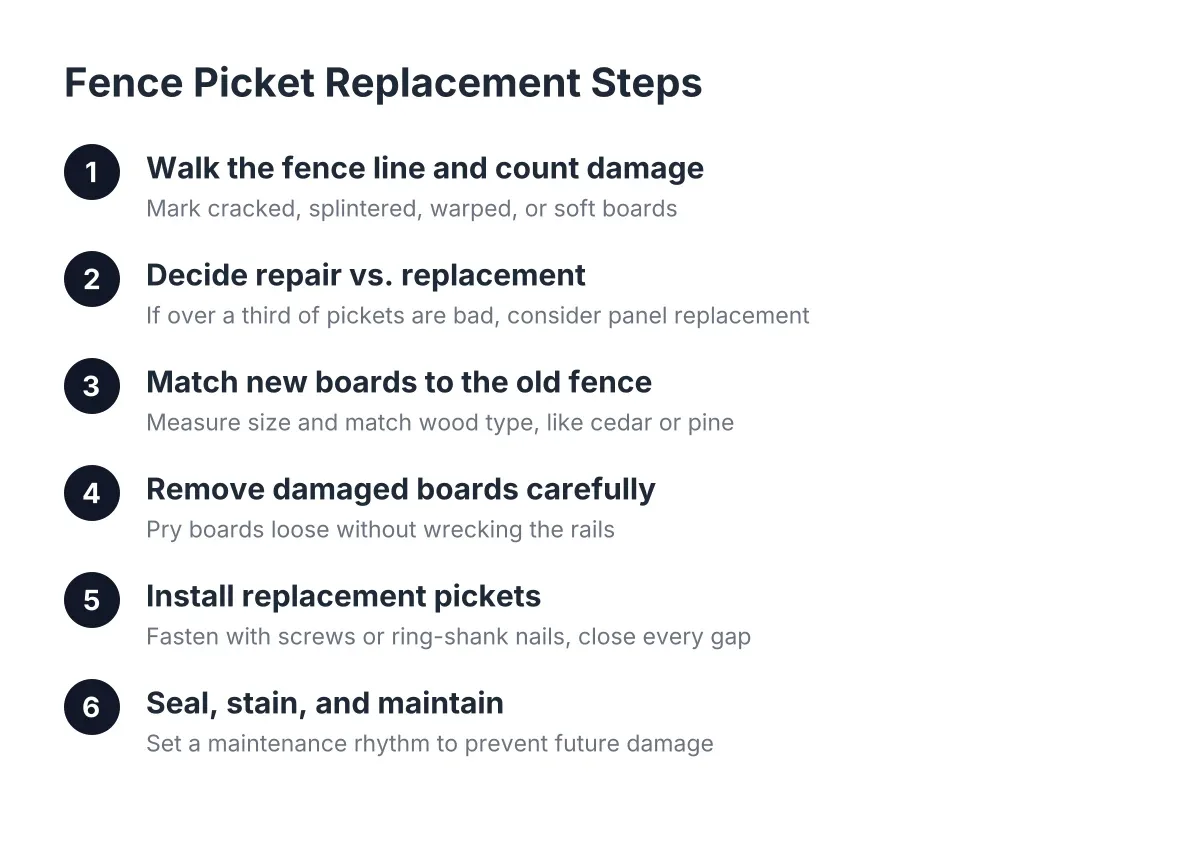
Step 1: Walk the Fence Line and Count the Damage
Before you buy a single board, walk the full fence line and mark every problem picket with chalk or painter's tape. Look for four things:
- Cracks that run more than a third of the board's length, or any crack wide enough to see daylight through
- Splintered or broken sections, especially at nail lines where boards split along the grain
- Warped or cupped boards that have pulled away from the rails, leaving gaps a dog can push through
- Soft spots near the ground, which usually mean rot rather than simple weathering
Count the marked boards and note where they cluster. Scattered damage across an otherwise solid fence points to picket replacement. However, if a whole section is failing, you may be looking at wood fence panel replacement instead, where you swap out the pickets and rails between two posts at once.
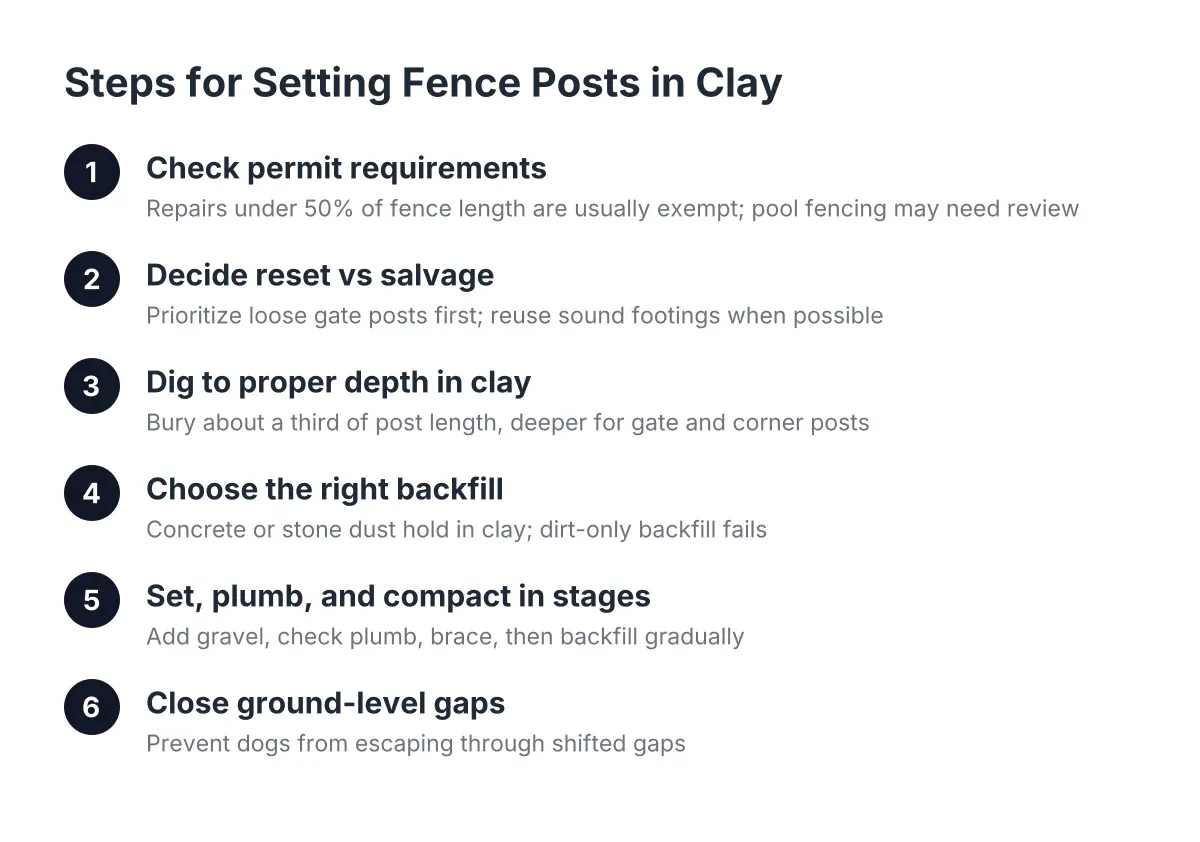
While you are out there, push on each post near the damaged boards. If a post wobbles or leans, fix that first. New pickets nailed to a leaning post will not stay straight for long, and in Mansfield's clay soil, posts shift as the ground swells and shrinks with seasonal moisture. Post problems are a separate repair with their own decisions, and that is a case where calling a professional makes sense.
Step 2: Check Whether Repair or Replacement Makes More Sense
A handful of bad boards on a structurally sound fence is an easy call: replace the boards. The math changes when damage is widespread. As a rough rule, if more than a third of the pickets are cracked, rotted, or warped, price out full wood fence panel replacement for the affected runs and compare it against piecemeal board swaps. Replacing boards one at a time on a fence that is failing everywhere just spreads the cost out without solving the problem.
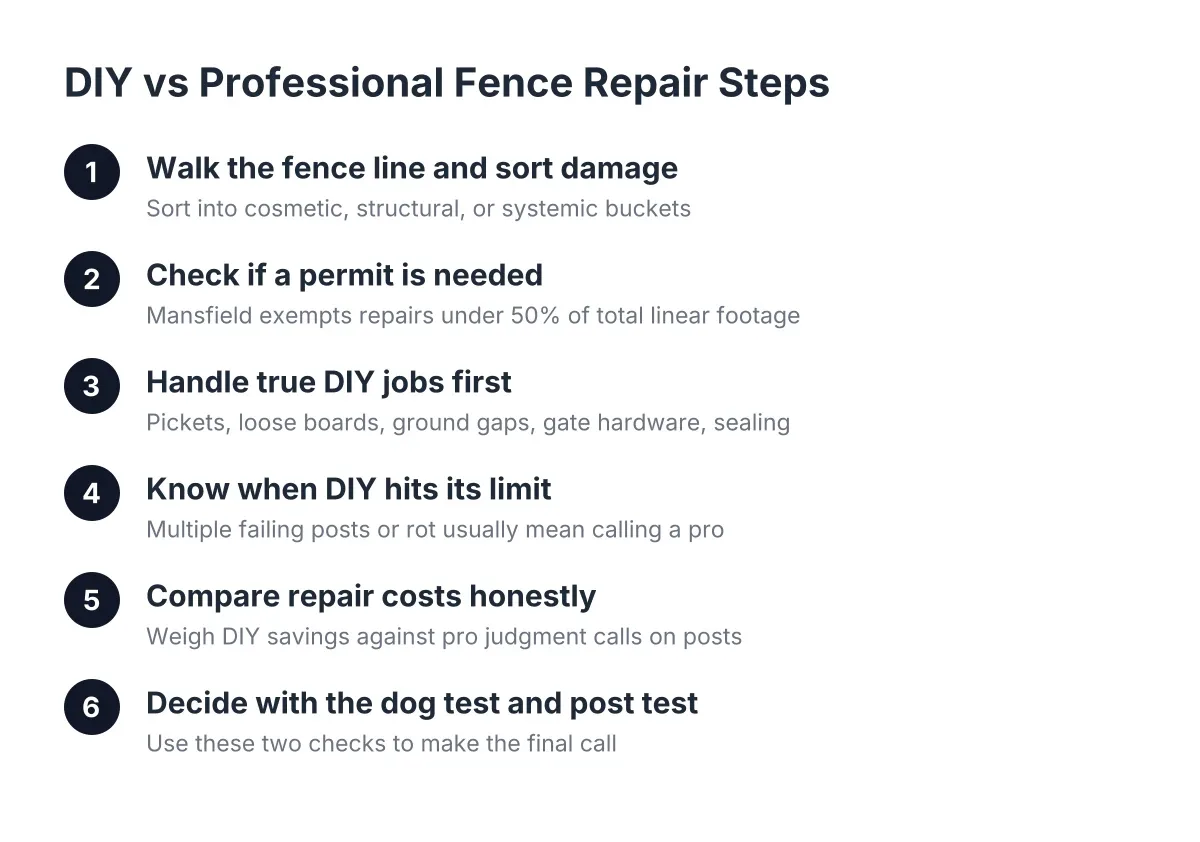
Permitting is one more factor, and in Mansfield it is simpler than many homeowners expect. The City of Mansfield, Texas building code exempts replacement or repair of an existing wood privacy fence from permitting when the work covers less than 50% of the total linear footage of fencing on the property. For a typical repair of a few boards or even a few panels, that means no permit trip.
Keep in mind that posts fail differently than pickets. Wood posts rot, warp, and twist over time even when the boards above them have been repainted and maintained. If a post is rotting at ground level, one practical fix preserves the concrete footing: cut the post off above the deteriorated section and set a steel post into the original footing. That interim approach keeps the fence standing now and lets the money you spend carry forward toward an eventual rebuild on steel posts.
Step 3: Match the New Boards to the Old Fence
Measure a damaged picket before you shop: width, thickness, and height. Most privacy fence replacement boards come in standard picket sizes, but older fences sometimes used dimensions that are harder to find, so bring a sample board to the lumber yard if you can.
Material matters too. Cedar resists rot and insects better than untreated pine and weathers to a gray that blends with an aged fence over time. Pressure-treated pine costs less and holds up well, but fresh green-treated boards stand out against weathered cedar for a season or two. If your fence is a cedar privacy fence, match it with cedar pickets so the repair disappears as the new wood ages.
Also note your fence style before buying quantities. A board-on-board fence overlaps its pickets, so it uses more boards per foot of fence line than a standard flat-face privacy fence. Buy for your actual style, not a generic per-foot estimate.
Step 4: Remove the Damaged Boards Without Wrecking the Rails
Work one board at a time. Pry the damaged picket loose with a flat bar, starting at the bottom rail and working up. If the board is nailed, lever against a scrap block so you do not dent the rail. If it is screwed, back the screws out; stripped heads can be pried through since the board is trash anyway.
Pull every old nail or screw from the rails, or drive nails flush. A leftover fastener will keep the new board from sitting flat, and a board that does not sit flat is a board that warps again. While each picket is off, inspect the exposed rail. Cracked or sagging rails can be reinforced by overlapping a scab rail segment across the two rail ends and fastening it with brackets, which ties the old and new sections together structurally.
Step 5: Install Replacement Pickets and Close Every Gap
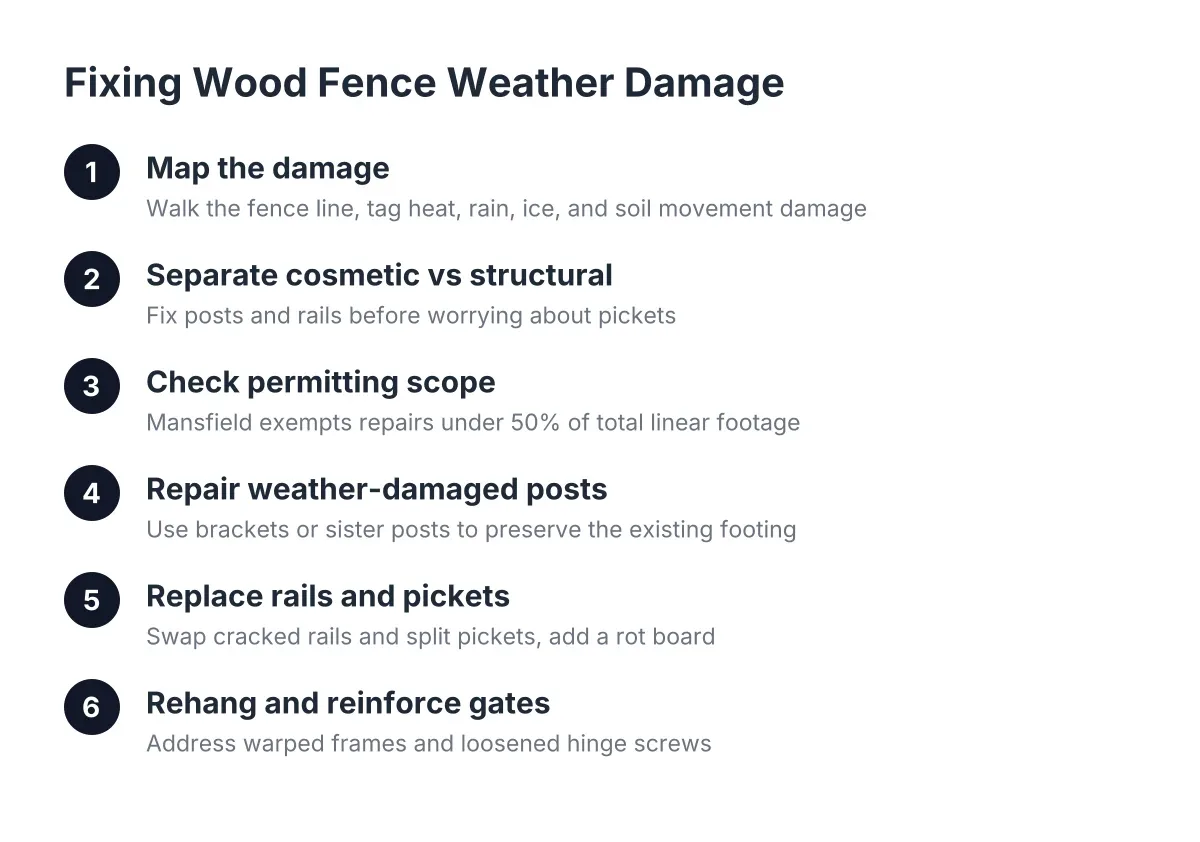
Set each new picket against the rails, align the top with its neighbors, and check plumb with a level. Fasten with two exterior-grade screws or ring-shank nails per rail. Screws hold warp-prone boards tighter over time, which matters in North Texas where summer heat and seasonal rain cycle the wood through constant expansion and contraction.
For dog owners, this step is where fence picket replacement either solves your problem or leaves it half fixed. Pay attention to three gap points:
- The bottom of the fence. Consider adding a pressure-treated pine rot board along the ground line. It closes the digging gap under the pickets, and it keeps cedar boards from wicking up moisture from pooled water, which extends the life of the whole fence.
- Board-to-board spacing. Butt privacy pickets snug. A determined dog will work a loose board sideways until the gap grows.
- The gate. Gates sag before fences do. If the latch-side gap has grown wide enough for a snout, adjust the hinges or add an anti-sag kit while you have your tools out.
Suppose a homeowner on a couple of acres outside Mansfield has a lab mix that got out twice last spring. The fence looks fine from the porch, but the walk-through turns up nine cracked pickets, a cupped board the dog has been nosing open, and a two-inch gap under one low section where water runs after storms. In that scenario, the fix is nine replacement boards, a rot board along the low run, and a gate hinge adjustment, a single afternoon of work that closes every escape route at once.
Step 6: Seal, Stain, and Set a Maintenance Rhythm
New boards need protection just like the old ones did. Let pressure-treated pine dry for several weeks before staining; cedar can usually be sealed sooner. A penetrating stain or sealer slows the sun and moisture damage that cracked your original boards in the first place.
Then put the fence on a schedule. Walk the line twice a year, ideally after summer and again after winter, since heat and the occasional ice event are what punish wood finishes here. Catching one loose picket in October is cheap. Finding six warped boards and a hole under the fence in April, after the dog has already found it, is not.
What Does Fence Picket Replacement Cost?
The cost of fence picket replacement depends on how many boards need swapping, the picket material you choose, the fence style, and whether rails or posts need work at the same time. Cedar costs more per board than pressure-treated pine, and board-on-board styles use more material per foot than flat-face privacy fences. For context on fencing work generally, HomeAdvisor reports the average cost to install a fence is $23 per linear foot, with a typical range of $6 to $50 depending on material and labor; targeted board replacement on an existing fence is a smaller job than new fence installation, so your scope will be narrower.
If damage runs past scattered boards into leaning posts, rotted rails, or sagging gates, get a wood fence repair estimate before committing to a board-by-board approach. A fence company can tell you quickly whether the structure underneath is worth building on.
When to Replace Boards and When to Replace the Fence
Replace boards when the posts are solid, the rails are sound, and damage is limited to scattered pickets. Replace sections or the whole fence when posts are rotting at the ground, rails sag between every post, or more boards are bad than good. One honest trade-off: new boards on a tired frame buy time, not a new fence. That can be exactly the right move while you plan and budget for a full rebuild, as long as you go in knowing which one you are buying.
If you need fence installation, Mansfield TX Fence Pros can help.
Prefer to talk it through? Call (817) 383-9360 — a quick call is usually the fastest way to get a straight answer for your situation.