Wood Fence Rot: How to Spot It, Assess It, and Decide on Repair vs. Replace
Rot is the quiet failure. A wood fence can look fine from the street while the posts are turning to mulch below grade. By the time a panel leans, the damage started years earlier. This guide walks you through wood fence repair the way a contractor would approach it: find the rot, measure how far it has spread, and decide whether a targeted fix or a full replacement makes more sense for your yard, your soil, and your timeline.
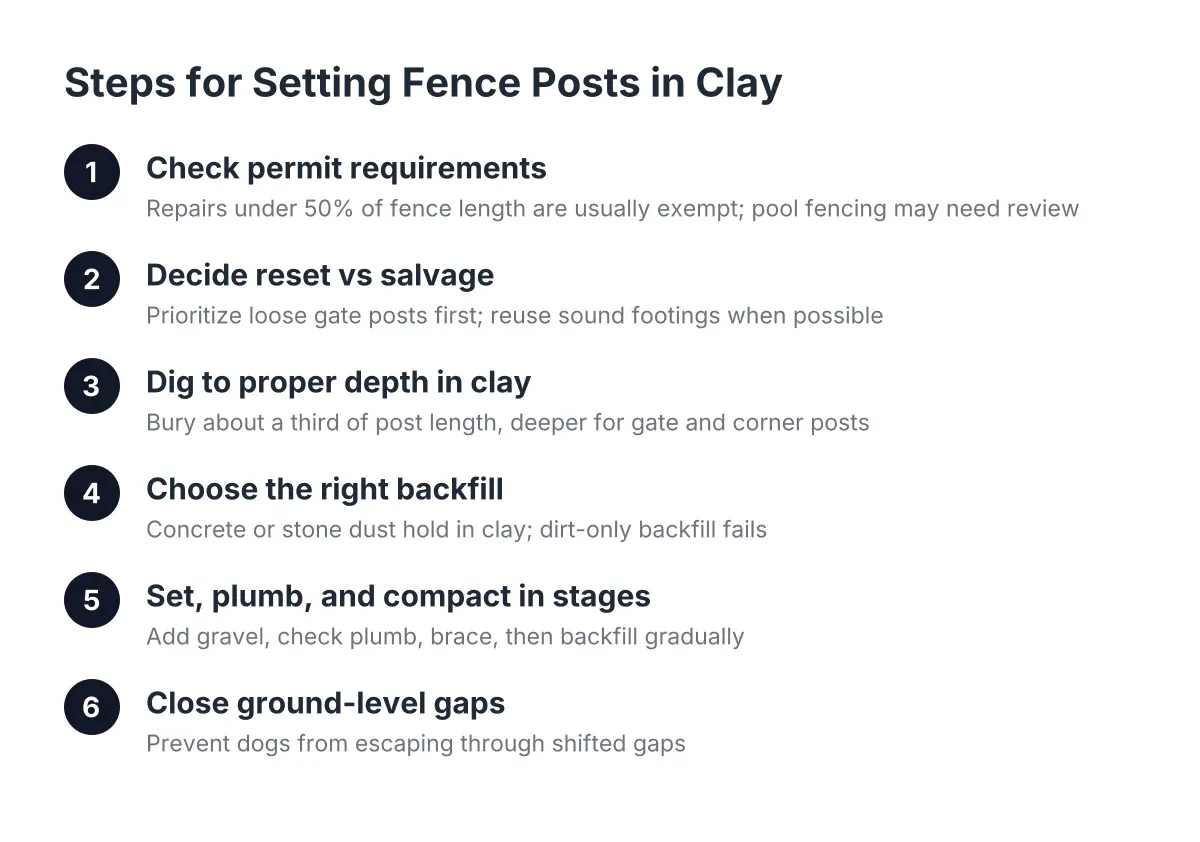
This matters more in Mansfield than in many places. North Texas clay soil swells when it rains and shrinks when it bakes. That seasonal movement works posts loose, opens gaps where water pools, and speeds up rot at exactly the point you cannot see: the ground line. If your yard slopes or drains poorly, the problem compounds. Here is how to work through it, step by step.
Step 1: Find the Rot Before It Finds You
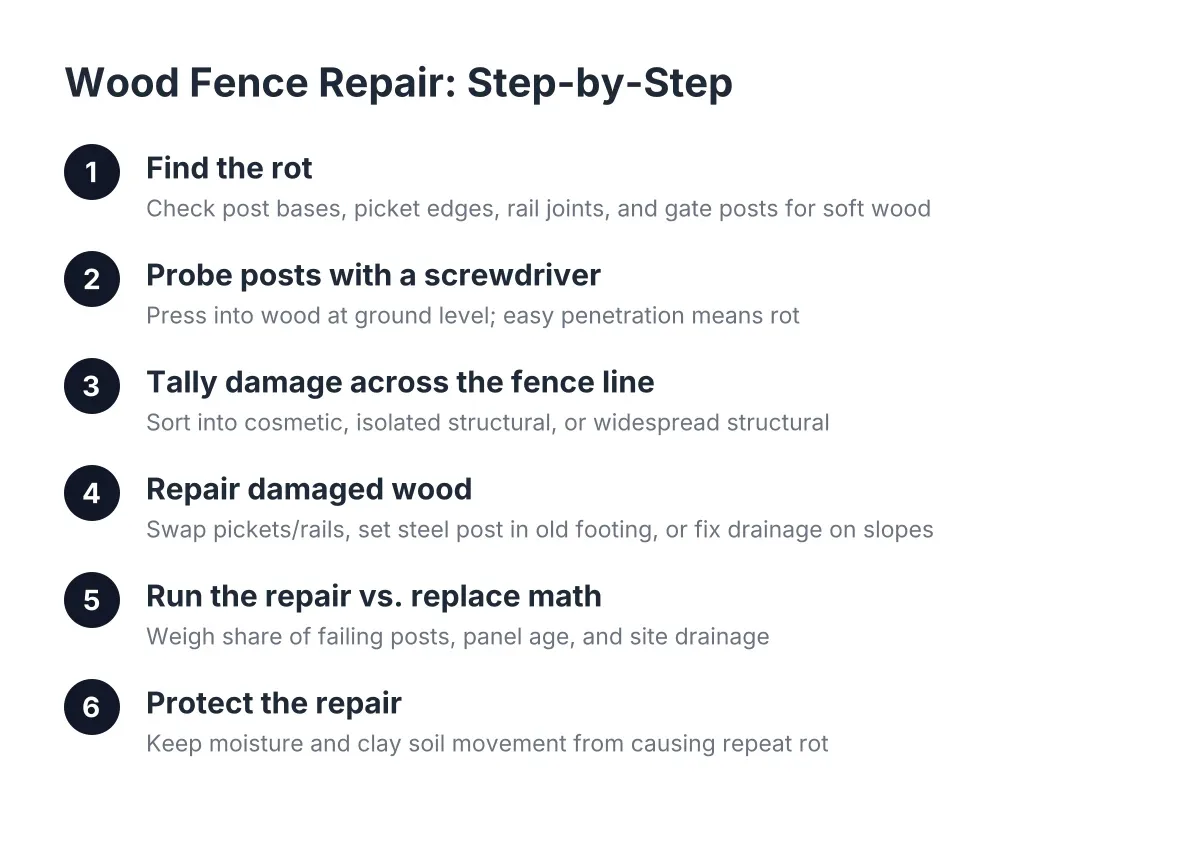
Start at the bottom, not the top. Rot almost always begins where wood meets soil or standing water. Walk the fence line and check these spots first:
- The base of each post at ground level, especially posts at the low end of a slope
- The bottom edge of pickets, where they wick up moisture from pooled water
- Rails where they meet the posts, since water collects in those joints
- Gate posts, which carry extra load and fail first when weakened
- Any post set in a low spot where water sits after heavy rain
Look for soft, spongy wood, dark staining, fungus, or wood that flakes away when you press it. Push on each post. A solid post barely moves. A rotting post flexes at the ground line even if everything above it looks healthy. Repainting or restaining panels over the years does nothing for the posts, which is why a fence can look well kept and still be structurally done.
Step 2: Probe the Posts With a Screwdriver
The screwdriver test tells you what your eyes cannot. Take a flathead screwdriver and press it into each post at ground level, and again a few inches below grade if you can scrape soil away.
If the tip sinks in with light pressure, the post has rot. If it penetrates deep with little resistance, that post is failing and will not hold through the next wet season. Mark failing posts with tape or chalk as you go.
Pay attention to posts backfilled with concrete all the way around the wood. Concrete sounds like protection, but it can trap moisture against the post and speed up rot instead of preventing it. Many leaning fences in clay soil trace back to exactly this: a solid concrete footing holding a post that rotted inside it.
Step 3: Tally the Damage Across the Whole Fence Line
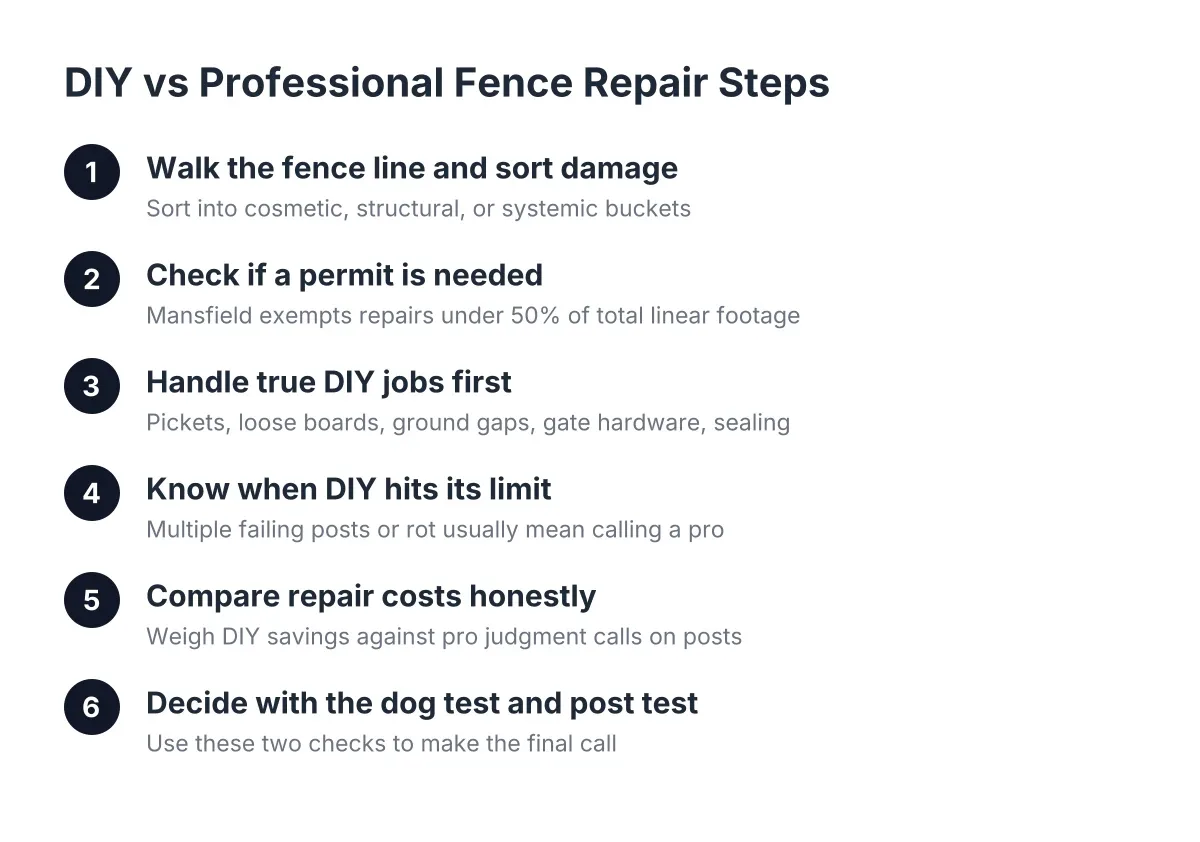
One bad post is a repair. A pattern of bad posts is a decision point. Count what you found and sort it into three buckets:
- Cosmetic damage. Cracked or warped pickets, a split rail, surface graying. Panels are fixable piece by piece.
- Structural damage, isolated. One to a handful of posts rotting at the ground line, with the rest of the fence solid.
- Structural damage, widespread. A third or more of the posts failing, panels sagging in multiple sections, or the fence leaning along a whole run.
In Mansfield, repair scope can also affect permitting. According to the City of Mansfield, Texas, replacement or repair of an existing wood privacy fence is exempt from permitting when the work covers less than half of the total linear footage on the property. Larger projects may trigger a permit, so a full tally up front saves a surprise later.
Step 4: Repairing Damaged Wood Fences
Different rot, different fix. Here is how each bucket typically gets handled.
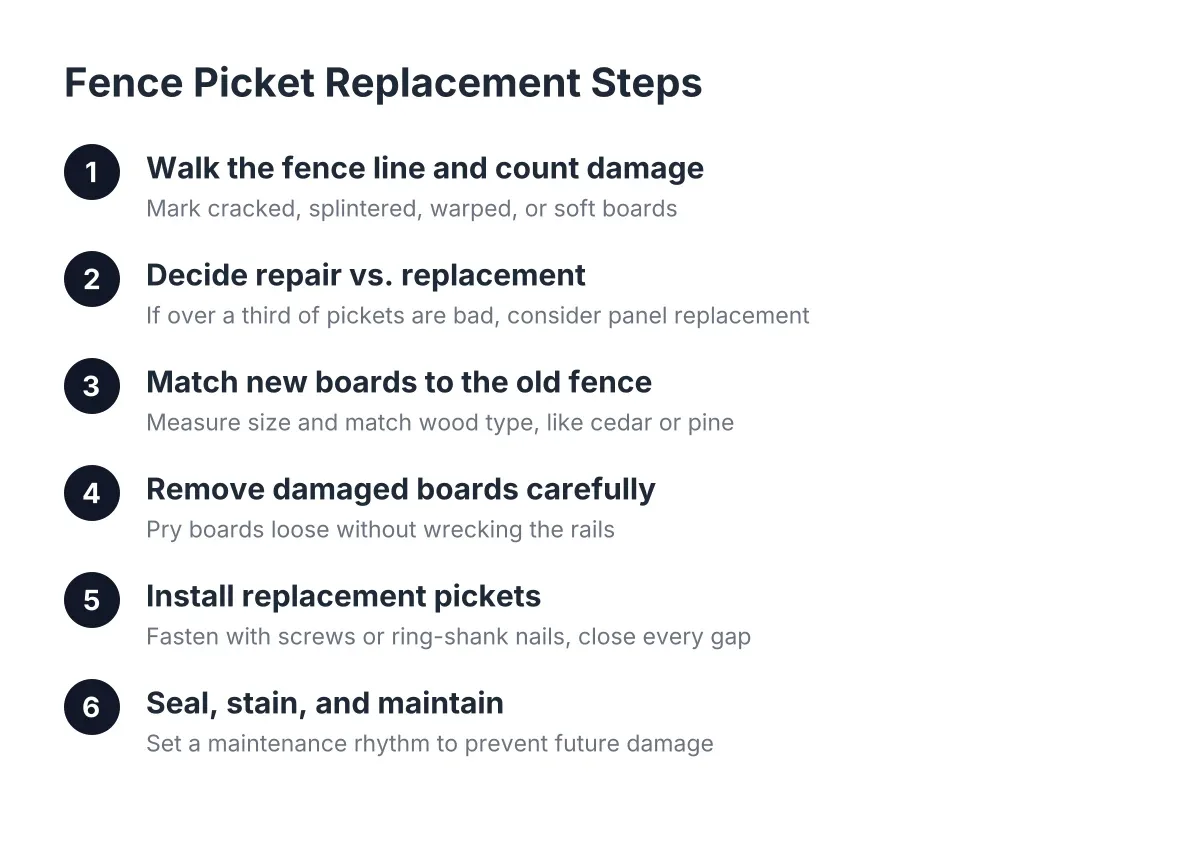
Pickets and rails: swap the wood, keep the structure
Rotted pickets and rails are the cheapest fix. New boards attach to the existing frame in minutes each. While you are at it, consider adding a pressure-treated pine rot board along the bottom of the fence. It sits between the soil and the pickets so cedar boards stop wicking up moisture from pooled water. On a sloped Mansfield lot where water runs along the fence line, that one addition does more for longevity than any stain.
Rotted posts: you may not need to dig out the footing
Here is the part most homeowners get wrong. The first instinct when a post rots at ground level is to rip out the post and its concrete footing, then start over. That is the most expensive and disruptive path, and it is often unnecessary.
When a post has rotted at the ground line but the concrete footing is intact, a crew can cut the post off above the deteriorated section and set a new steel post into the original footing. The fence stops sagging, the footing you already paid for keeps working, and the money spent now effectively moves you toward a stronger fence. Steel posts do not warp, twist, or rot the way wood posts do, which addresses the exact failure that brought you here.
Leaning sections on slopes: fix the cause, not just the post
However, if posts lean because water runs downhill along the fence and saturates the soil, replacing the post alone buys you a few seasons at best. The drainage problem has to be part of the repair conversation. Sometimes that means regrading a short run, adding a rot board, or stepping panels differently on the slope. An honest fence repair assessment names the water problem instead of selling you the same failure twice.
Step 5: Run the Repair vs. Replace Math
The decision usually comes down to three questions:
- What share of the posts are failing? Scattered failures favor repair. Widespread post rot favors replacement, because you would be paying repair labor across most of the fence anyway.
- How old are the panels? Cedar pickets with years of life left argue for post repair. Gray, brittle, cupping pickets on top of rotting posts argue for starting over.
- Is the site working against you? Clay soil movement, a slope, and poor drainage shorten the life of any wood fence. If your last fence failed in a few years, replacement with steel posts, proper drainage-minded setting, and a rot board changes the outcome instead of repeating it.
For context on money, wood fence repair costs scale mostly with how many posts need attention and how hard they are to access, not with the length of the whole fence. Replacement scales with total footage; HomeAdvisor puts average fence installation at $23 per linear foot, with a typical range of $6 to $50 depending on material and labor. That gap is why an accurate post count matters before you compare bids in 2026.
Suppose a homeowner on a sloped lot in Mansfield finds four rotting posts out of thirty after a wet spring, all at the downhill end. In that scenario, cutting those four posts and setting steel replacements into the existing footings, plus adding a rot board along the low run, fixes the structural problem for a fraction of replacement cost. The same homeowner with eighteen failing posts is better served pricing a new cedar privacy fence on steel posts and skipping the patchwork.
Step 6: Protect the Repair So You Are Not Back in Three Years
A repair that ignores moisture is a down payment on the next repair. After the structural work:
- Stain both sides of the fence, not just the street side. Two-sided staining meaningfully extends the life of the wood, not just its looks.
- Keep soil, mulch, and leaf piles off the bottom of the pickets.
- Check gate posts and hinges each season, since gates stress their posts hardest.
- Watch low spots after heavy rain. Standing water along the fence line is tomorrow's rot.
One honest caveat: if your fence sits on a retaining wall, the lean involves heaving soil rather than rot, or the slope needs grading, bring in a professional before anyone sets a post. Soil movement problems can look like fence problems, and fixing the wrong one wastes money. A straightforward inspection from a local fence company that works in clay soil daily will tell you which problem you actually have, and whether wood fence repair or replacement is the right call for your lot.
If you need fence repair, Mansfield TX Fence Pros can help.
Prefer to talk it through? Call (817) 383-9360 — a quick call is usually the fastest way to get a straight answer for your situation.