Vinyl vs. Wood vs. Concrete Fence: Which Survives North Texas Heat?
If you are choosing between a vinyl, wood, or concrete fence in Mansfield, the real question is not which one looks best in the showroom. It is which one still stands straight after a few North Texas summers, a couple of ice storms, and the constant push and pull of clay soil. This guide walks you through the decision step by step, so you can pick the right fence material for heat tolerance and durability, and find the option that fits your lot, your budget, and the heat we actually get here.
Each step below moves you from comparing materials to planning the install. By the end, you should know which fence makes sense for your property and what to ask a fence company before anyone digs a post hole.
Step 1: Understand How Heat Attacks Each Fence Material
Start by learning what Texas heat actually does to each material. The failures look different, and that changes which trade-offs matter to you.
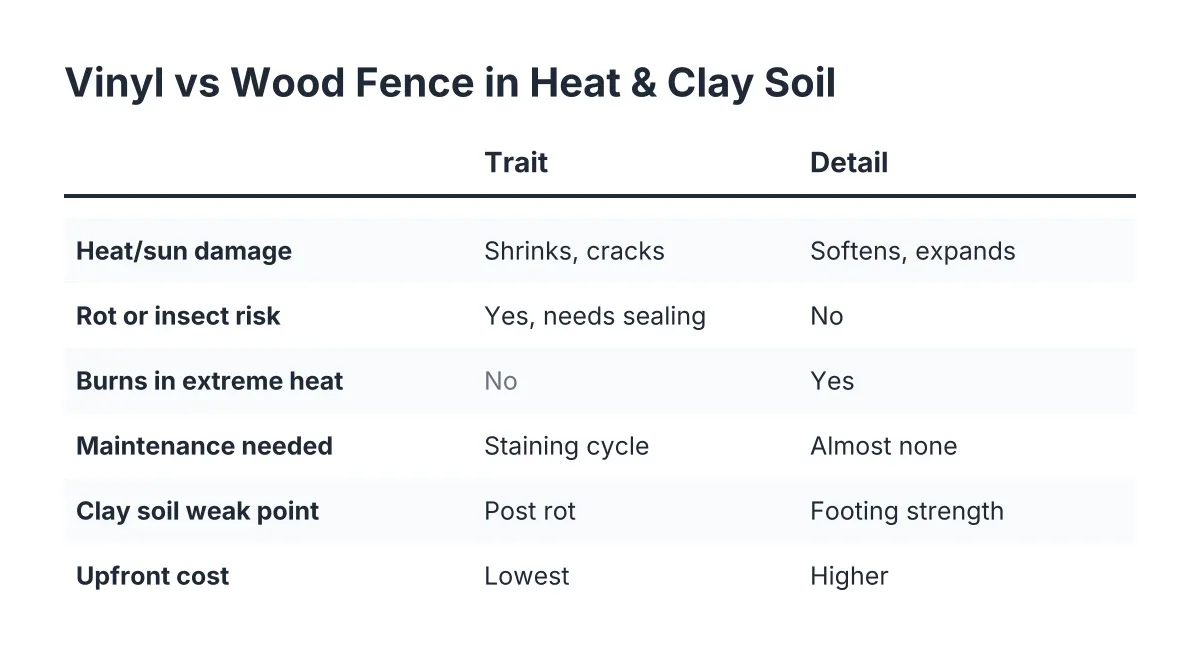
Wood and cedar fences lose moisture fast in summer. Boards shrink, crack, and cup. Fasteners loosen as the wood moves. A cedar privacy fence holds up better than cheaper pine because cedar resists rot and insects naturally, but it still dries out. Expect staining or sealing on a regular cycle if you want it to last.
Vinyl handles heat differently. It will not rot, crack from drying, or need stain. However, dark vinyl absorbs more heat and can soften slightly on the hottest afternoons, and panels expand and contract with temperature swings. A good vinyl fence installation accounts for that expansion by leaving room in the rail pockets. One honest limitation: vinyl is still PVC, so it can burn in extreme conditions like a grass fire, and a bad impact can crack a panel.
Concrete shrugs off heat almost entirely. A concrete fence does not fade, warp, or burn. Its weak point is not the sun; it is the ground under it, which brings us to the next step.
Step 2: How Fence Material Responds to Mansfield Heat and Clay Soil
Next, look down instead of up. In Mansfield, the soil moves more than the weather does. North Texas clay swells when seasonal rains soak it and shrinks hard during summer drought. That movement stresses fence posts and gate hinges year after year.
Here is how each option responds to shifting clay:
- Wood posts flex a little, which can help, but wet-dry cycles at the ground line speed up rot. A leaning wood fence in Mansfield usually failed at the post, not the pickets.
- Vinyl posts are the foundation of the whole fence system. They carry the panels, so they need properly set footings. In tough spots, installers can reinforce a vinyl post with a metal pipe inside the sleeve for extra strength.
- Concrete fences are heavy, so soil movement shows up as cracking or tilting if the footings were not sized for the load. Done right, they are the most stable option; done wrong, they are the most expensive to fix.
Therefore, whichever material you choose, ask your installer how they set posts for clay movement. Depth, footing size, and drainage around the post matter more here than in most of the country.
Step 3: Compare Vinyl, Wood, and Concrete Fence Costs Honestly
Now put rough numbers in context. Nationally, HomeAdvisor reports the average cost to install a fence is $23 per linear foot, with a typical range of $6 to $50 per linear foot depending on material and labor. Your price lands inside that spread based on what you pick and what your lot demands.
As a general pattern, wood costs less upfront but needs the most maintenance. Vinyl costs more at install and almost nothing after. Concrete costs the most upfront, and material prices have not been kind; according to Gordian, concrete costs rose 6.7% year-over-year even after a slight dip at the start of 2025.
In addition, price reflects more than material and labor. Construction style, gate count, fence length, and site conditions all drive the quote. A short run of vinyl wood concrete fence comparisons online will not tell you what a sloped back corner or a driveway gate adds; a site visit will.
One permitting note for repair projects as of 2026: the City of Mansfield, Texas exempts replacement or repair of an existing wood privacy fence from permitting when the work covers less than 50% of the total linear footage on the property. Confirm current rules with the city before a full replacement.
Step 4: Match the Material to Your Actual Job
With costs and conditions in view, match the fence to the problem you are solving. Not every yard needs the same answer.
For example, suppose a homeowner on a quarter-acre lot in Mansfield has a ten-year-old cedar privacy fence with two rotted posts and a sagging gate. In that scenario, a fence repair that resets the posts and rehangs the gate often beats a full replacement. But if a storm took out several sections and the rest of the posts wobble, replacing with vinyl or a new cedar fence may cost less over ten years than repairing piecemeal.
Use these quick decision cues:
- Choose wood or cedar if upfront budget rules, you like the natural look, and you will keep up with staining.
- Choose vinyl if you want a privacy fence that ignores heat, rot, and paint for decades, and you can accept a higher install price.
- Choose concrete if you need maximum durability, wind resistance, or a masonry look, and the budget supports it.
People also ask whether vinyl is stronger than wood. Panel for panel, vinyl flexes where wood snaps, and it never rots, but a hard direct hit can crack it while wood might just scar. Strength depends on the failure you are guarding against. And no, you should not sleeve vinyl over untreated wood posts as a shortcut; wood rot inside the sleeve defeats the point of going vinyl.
Step 5: Plan the Install for Heat and Gates, Not Just Panels
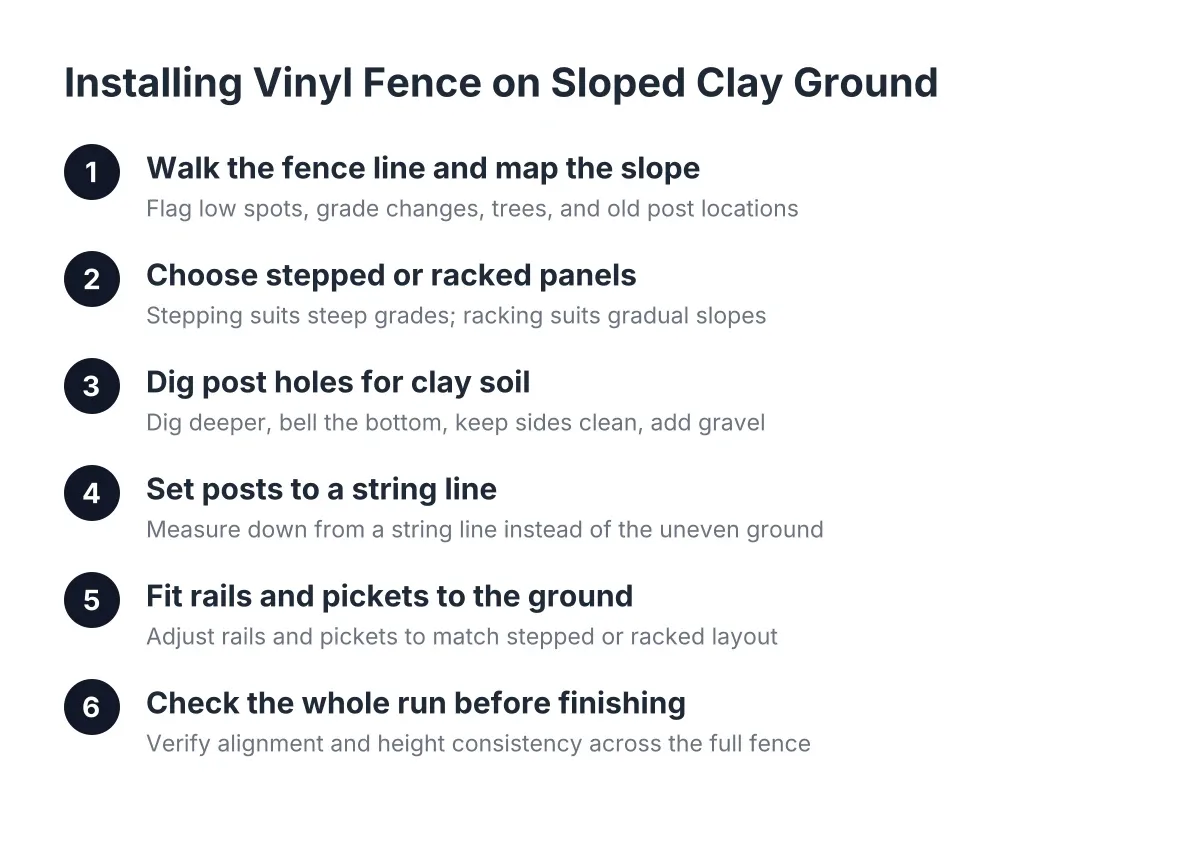
Finally, plan the details that separate a fence that lasts from one that fails early. When selecting fence material for heat conditions, proper rail alignment on a vinyl install matters—the rail openings in every post must line up along the fence line before concrete is poured; there is no adjusting them after. On slopes, crews can reverse the picket direction on angled sections so pickets do not slide downhill during assembly.
Gates deserve extra attention, because they are the first thing to fail when soil shifts. If you have ever had a driveway gate stuck open the morning you leave for work, you know the scramble. Heavier-duty posts at gate openings, proper hinge hardware, and a gate installation sized for seasonal post movement prevent most of those calls. Heavy-duty end and corner posts are built thicker than line posts for exactly this reason.
A few planning items worth settling before install day:
- Walk the property line and mark it; do not guess off the old fence.
- Decide gate locations and widths now, including any future driveway gate.
- Ask how posts will be set in clay and how water will drain away from footings.
- Confirm who calls in utility line locates before digging.
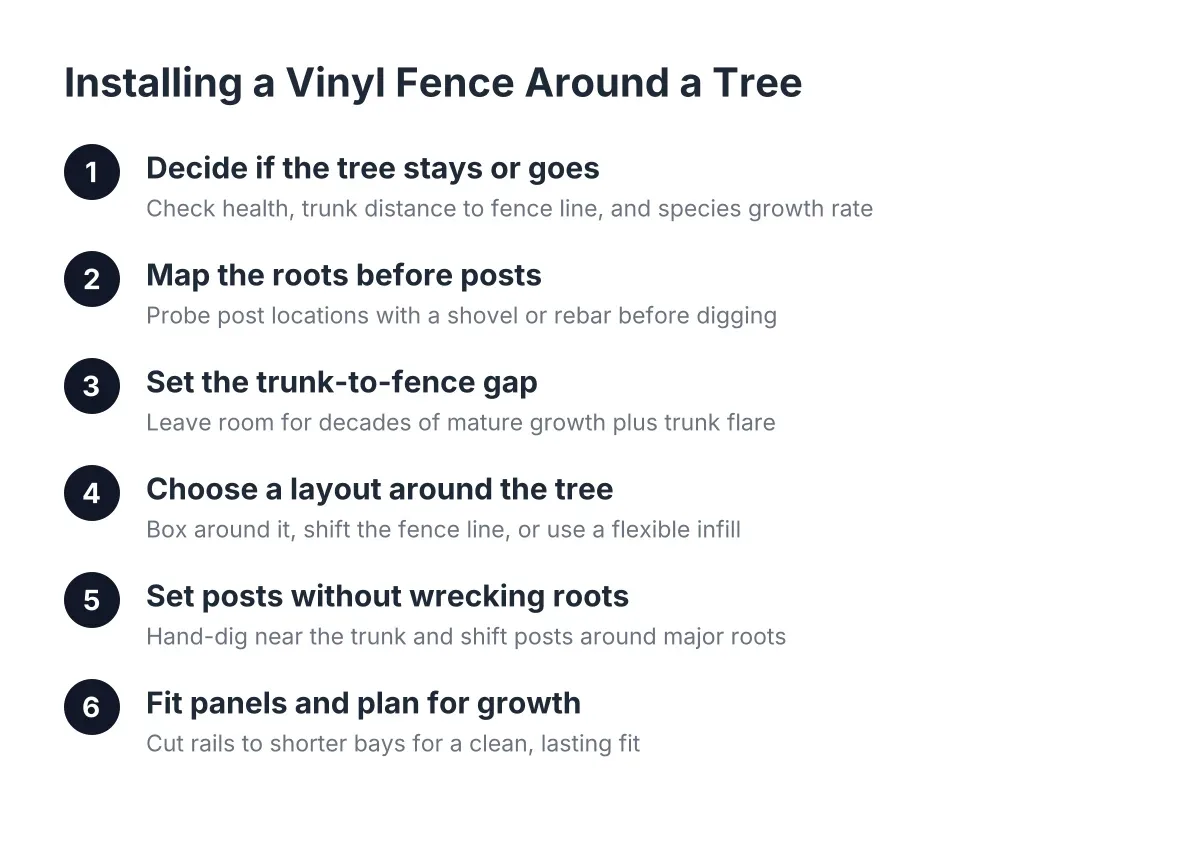
If your yard has steep grade changes, mature tree roots along the line, or an existing concrete surface the fence must cross, bring in a professional to scope it. Those conditions need specific techniques, like core drilling through concrete or reinforced posts around trees, and a wrong guess costs real money.
The Bottom Line on Heat, Clay, and Your Next Fence
A vinyl, wood, or concrete fence can each last in Mansfield if it is matched to the site and installed for our conditions. Wood wins on upfront price and loses on maintenance. Vinyl wins on heat tolerance and low upkeep. Concrete wins on raw durability and costs the most to get there. Whatever you choose, the posts and the gate hardware decide how long it stands, so spend your questions there before you sign anything.
If you need vinyl fence installation, Mansfield TX Fence Pros can help.
Prefer to talk it through? Call (817) 383-9360 — a quick call is usually the fastest way to get a straight answer for your situation.