Vinyl Fence Around a Tree: Spacing, Growth, and Install Tricks
Running a vinyl fence around a tree is one of the most common complications in a backyard fence project, and it trips up more installs than slopes or rocky soil. The tree sits exactly where a post or panel needs to go, and vinyl does not bend, notch, or scribe the way wood does. The good news: with the right spacing, a few layout tricks, and a plan for how the trunk will grow, you can keep the tree and still get a clean, straight fence line. This guide walks through the process step by step, written for North Texas conditions, where clay soil and big root systems add their own wrinkles.
This matters most if you are mid-remodel. Say a homeowner in Mansfield is finishing a pool and the permit requires code-compliant fencing on all sides, but a mature live oak sits two feet inside the planned fence line. In that scenario, the tree decision can hold up the whole project, so sort it out before the crew shows up.
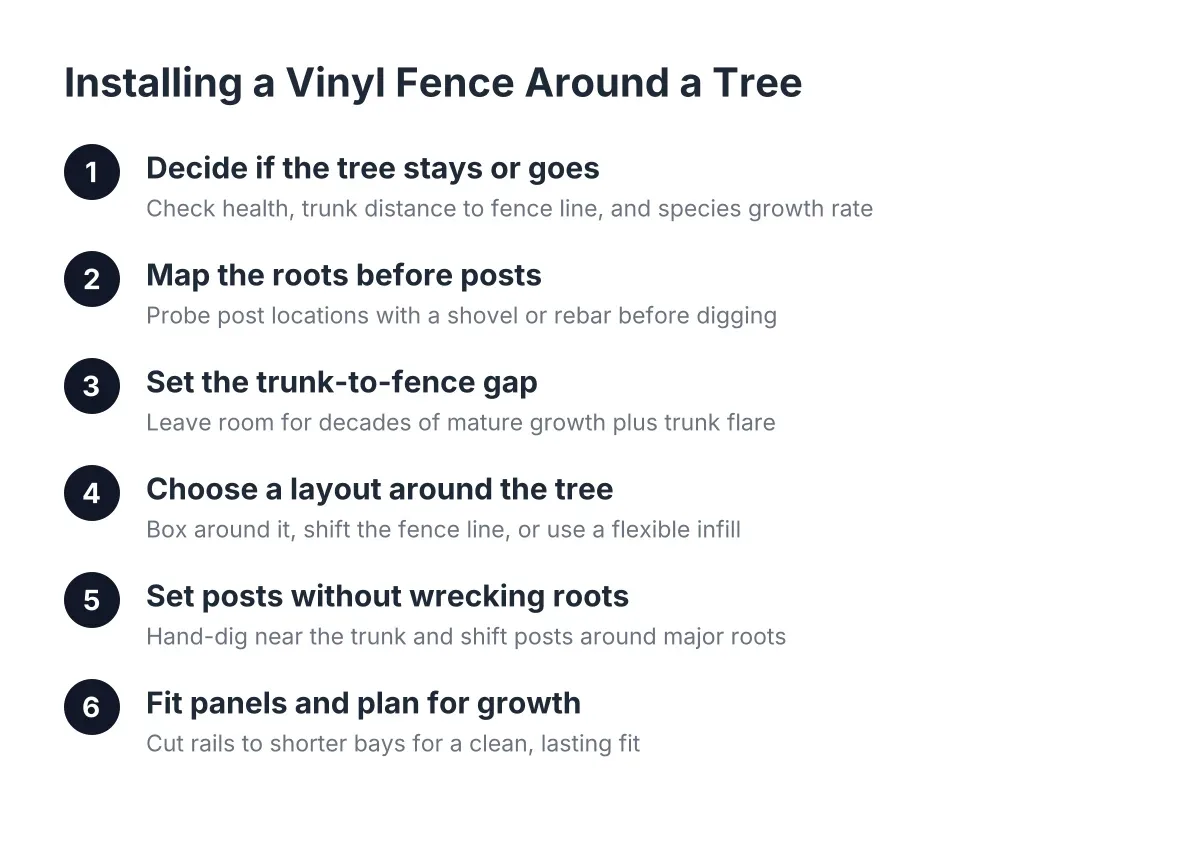
Step 1: Decide Whether the Tree Stays or Goes
Before you measure anything, make an honest call on the tree itself. A healthy, mature shade tree adds real value to a backyard, especially next to a new pool or patio. A half-dead hackberry leaning toward your new fence line is a different story.
Ask three questions:
- Is the tree healthy? Dead limbs, fungus at the base, or a hollow trunk mean the tree may come down on its own schedule, possibly onto your new fence.
- How close is the trunk to the fence line? A trunk sitting directly on the line forces a jog in the fence. A trunk a few feet away may only need a wider post spacing.
- How fast does this species grow? A fast grower will close any gap you leave much sooner than a slow one. Plan the gap for the tree's future diameter, not today's.
If the tree is healthy and you want to keep it, move to Step 2. If it is failing, remove it before fence installation starts. Pulling a stump after the fence is up risks cracking vinyl panels and disturbing fresh post concrete.
Step 2: Map the Roots Before You Map the Posts
Vinyl fence posts are the foundation of the whole system; the panels only stay straight if the posts do. Each post needs a concrete-set hole, and a major root in the wrong spot can block that hole or get cut in a way that harms the tree.
First, walk the fence line and look for surface roots. Large roots near the surface usually signal larger roots below. Next, probe the planned post locations with a shovel or a length of rebar before committing to the layout. If you hit heavy roots at a post location, shift the post a foot or two and adjust panel lengths instead; vinyl rails can be cut to fit a shorter bay, which gives you flexibility a pre-built wood panel does not.
In Mansfield's clay soil, roots from mature trees often run long and shallow because the clay holds moisture near the surface. Expect to find roots farther from the trunk than you would in sandy ground.
Step 3: Set the Gap Between the Vinyl Fence and the Tree Trunk
How much space should a vinyl fence leave around a tree?
A vinyl fence should leave enough clearance around a tree for the trunk to grow for the life of the fence, which for vinyl can be decades. Since vinyl resists rot and fading far longer than wood, plan the gap for the trunk's mature diameter plus working room, not its current size.
Here is the practical logic. A wood fence board that a trunk eventually pushes against can be trimmed or replaced one picket at a time. Vinyl panels are a system of rails, pickets, and side strips; when a trunk presses into one, it can bow the rail, pop pickets loose, or crack the panel. Repairs are bigger and uglier than with wood.
So err generous. Think about where that trunk will be in twenty or thirty years, then leave room beyond that so bark never touches vinyl. Also account for trunk flare at the base, which spreads wider than the trunk itself. If privacy or pet containment matters in that gap, plan to fill it; physical fences contain dogs far better than electronic ones, with a 23% escape rate for physical fences versus 44% for electronic fences in one dog-containment comparison, according to Starinsky, Lord, and Herron (2017), JAVMA. A short infill section you can replace later beats a tight permanent panel.
Step 4: Choose a Layout for the Vinyl Fence Around the Tree
There are three workable layouts when a tree sits on or near the fence line. Each has trade-offs.
Option 1: Box around the tree
Jog the fence line around the trunk with two short return panels and a bypass panel, forming a three-sided box. This keeps the fence fully closed, which matters for pool code and pet containment. The trade-off is cost: the box adds posts, concrete, and labor, and the jog is visible from the yard.
Option 2: Shift the whole fence line
If the tree sits just inside your property, move the entire fence run inward so it clears the trunk and the major roots. You give up a strip of yard, but you get a straight, clean line with no extra posts. For a new pool enclosure where looks matter, this is often the best answer.
Option 3: Stop and restart with a flexible infill
End the vinyl run at a post on each side of the tree and bridge the gap with a removable or replaceable section. This works well for very large trunks where boxing around them would look awkward. However, confirm the infill still meets any pool barrier requirements before you rely on it; a gap that a child can pass through fails the purpose of the fence.
If the tree sits on a shared property line, talk to your neighbor before choosing a layout. A fence jog onto either side of the line is the kind of thing worth agreeing on in writing.
Step 5: Set Posts Near the Tree Without Wrecking the Roots
Now dig. Post holes near a tree call for more care than open-yard holes.
- Hand-dig the holes closest to the trunk. An auger will tear through roots you might have steered around with a shovel and digging bar.
- Shift rather than cut when you hit a major root. Cutting one large structural root can destabilize a mature tree. Move the hole and cut a rail to fit the new spacing.
- Consider a reinforced post at tight spots. Where a full-depth hole is impossible because of roots, a metal pipe set in concrete with the vinyl post sleeved over it adds strength in a smaller footprint. This same trick helps where a fence butts against an existing structure.
- Align the rail openings before pouring. Every post's rail holes must line up exactly along the run, especially through a jog, or the panels will not seat. Check alignment with a string line before concrete goes in.
- Let concrete cure before hanging panels. Clay soil holds moisture and can slow curing; rushing this step is how posts end up leaning.
This is the stage where professional help earns its keep. If the tree is large, close to the line, or clearly valuable, a fence company experienced with tree-adjacent installs, ideally working alongside an arborist's advice, protects both the tree and the fence. Cutting the wrong root to save a post location is an expensive mistake to discover three summers later.
Step 6: Fit Panels and Plan for Growth
With posts cured, assemble the panels. Around a tree you will almost always have at least one custom-width bay, so cut the rails to length and secure them with the screws made for vinyl systems. When trimming the last picket to meet a post, orient the groove side in first; the groove's stopping point stays visible, which makes marking the final cut easier. Side strips on the posts then lock the grooved pickets in place.
In addition, think ahead on maintenance:
- Trim limbs above the fence line. North Texas ice events load branches fast, and a falling limb that a cedar privacy fence might shrug off can crack a vinyl rail.
- Check the tree gap each spring. When bark gets within a hand's width of vinyl, trim the panel layout or widen the gap before contact happens.
- Keep irrigation off the posts. Tree roots chase water; soaker hoses running along the fence line pull roots straight toward your post footings.
Done this way, a vinyl fence installation can coexist with a mature tree for the life of both. Vinyl's resistance to rot and insects is exactly why it pairs well with the shade and moisture under a canopy, where a wood fence would struggle. One honest caveat: vinyl is still PVC, and in an extreme event like a wildfire it will burn, so it is not indestructible.
What a Vinyl Fence Near Trees Costs Compared to an Open Run
Expect a tree to add cost, and know why. Industry-wide, HomeAdvisor puts the average cost to install a fence at $23 per linear foot, with a typical range of $6 to $50 depending on material and labor. A tree pushes a project toward the higher end of whatever range applies because of:
- Extra posts and concrete for a boxed jog
- Hand-digging instead of auger work near roots
- Custom-cut rails and panels for odd bay widths
- Possible arborist consultation or limb trimming
None of that is padding; it is real labor. A contractor who quotes a tree-heavy fence line in 2026 without walking it first is guessing, and guesses become change orders. Get the site conditions into the quote up front, especially if your fence is tied to a pool permit deadline.
Handled with the right spacing and layout, the tree becomes a feature of the yard instead of a problem on the fence line. Plan the gap for growth, protect the roots at the post holes, and the fence and the tree will both outlast the project that prompted them.
If you need vinyl fence installation, Mansfield TX Fence Pros can help.
Prefer to talk it through? Call (817) 383-9360 — a quick call is usually the fastest way to get a straight answer for your situation.