Vinyl Fence Around Pool: Safety Codes, Drainage, and Height Steps
A vinyl fence around a pool is not a regular backyard fence with a different job title. It has to meet pool fence safety code, hold up to splash water and pool chemicals, and stay plumb in North Texas clay that swells and shrinks with every wet and dry spell. Get one of those three things wrong and you end up with a gate that will not latch, a fence that fails inspection, or posts that lean within a couple of seasons.
This guide walks through the process step by step, the way a crew would actually plan it in Mansfield. It is written for anyone sizing up a pool enclosure project, whether that is a homeowner with a new-build pool or a property manager responsible for a community pool where the gate already sticks and the board is asking questions.
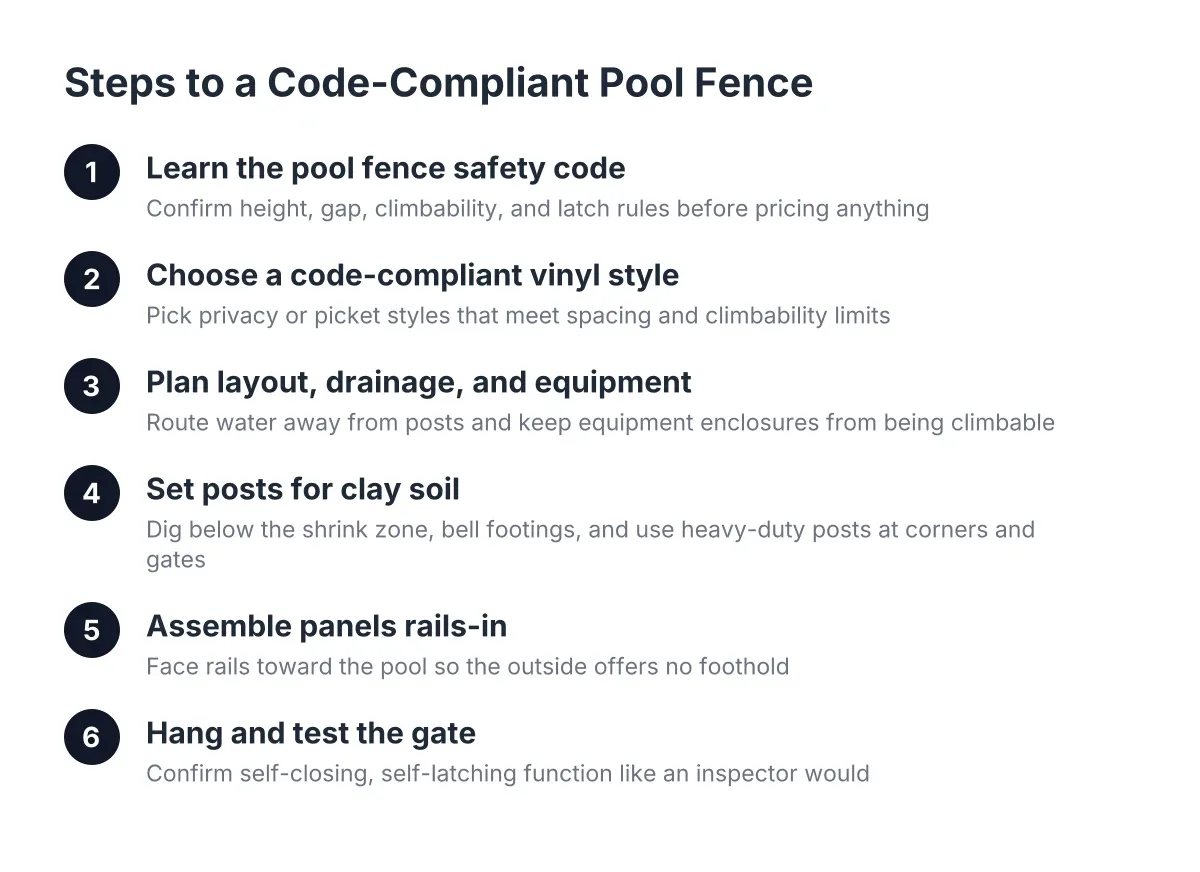
Step 1: Learn the Pool Fence Safety Code Before You Price Anything
Start with code, not catalogs. Pool barrier requirements are the one part of this project where "close enough" does not exist. Before you measure a single foot of fence line, confirm the current requirements with the City of Mansfield and, if the pool serves a community, with your HOA documents and insurer.
In general, pool barrier rules address a consistent set of concerns:
- Minimum fence height around the pool area
- Maximum gap under the fence and between pickets, so a small child cannot squeeze through
- Climbability, meaning no horizontal rails or footholds exposed on the outside of the fence
- Self-closing, self-latching gates that swing away from the pool
- Latch height, placed high enough that a young child cannot reach it
That climbability point trips up more homeowners than any other. Many people want the finished picket side of the fence facing their own yard, with the rails facing out. Around a pool, that is backwards. Exposed rails on the outside act as a ladder for a child. Code generally requires the rails to face inward, toward the pool side. One advantage of many vinyl fence styles is that both sides look finished, so you give up nothing visually by orienting the fence the right way.
Step 2: Choose a Vinyl Style That Passes Pool Fence Safety Code
Not every vinyl fence qualifies as a pool barrier, so pick the style with code in mind. A full privacy panel with no gaps usually satisfies spacing rules by default. A picket or semi-privacy style can also work, as long as the gaps between pickets stay inside the allowed limit and nothing on the outside face offers a foothold.
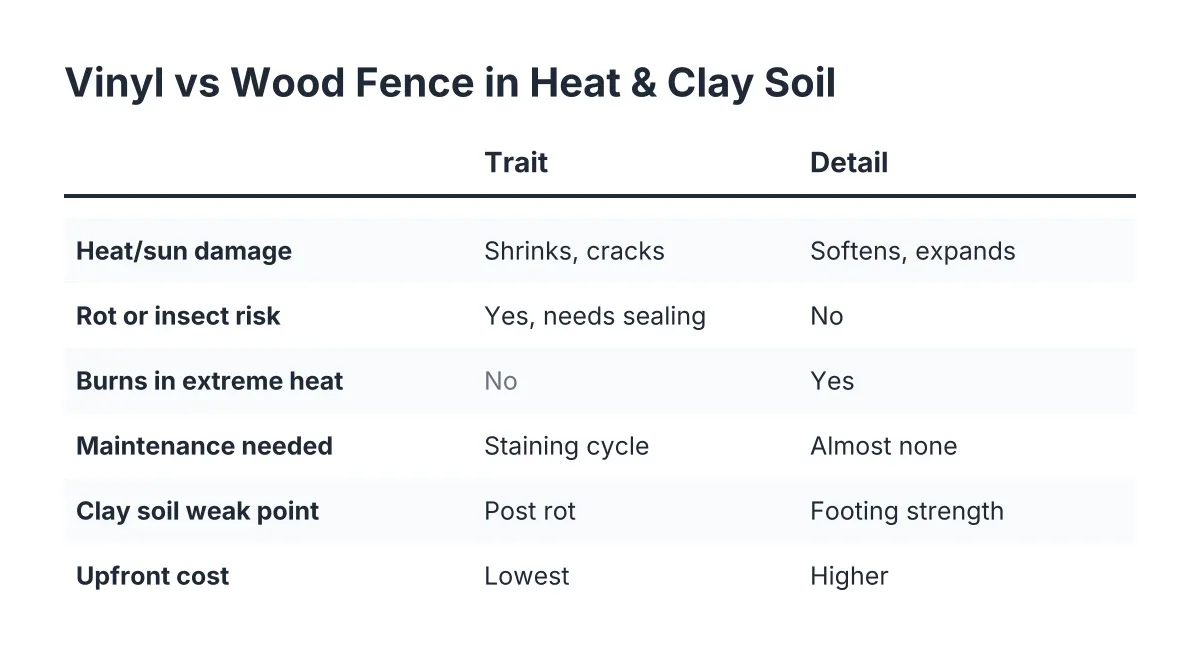
Vinyl earns its spot around pools for practical reasons. It does not rot in splash zones the way an untreated wood fence can, it shrugs off chlorinated water, and it does not need staining or sealing. A white vinyl fence around a pool also reflects heat instead of soaking it up, which matters when kids are running barefoot past it in August. The honest trade-off: vinyl is still PVC. It can crack under hard impact in a hard freeze, and it will not survive direct fire the way a concrete fence would. For most Mansfield pool areas, those limits are acceptable; for a property backing onto open land with wildfire exposure, talk through material options with a fence company first.
Height matters too. Pool fencing is commonly built taller than decorative fencing, and your city, HOA, or insurance carrier may each have a say. Check all three before ordering panels, because a fence that comes up short gets rebuilt, not adjusted.
Step 3: Plan the Layout, Drainage, and Equipment Enclosure Together
Walk the fence line with three questions: where does water go, where does the pool deck meet soil, and where does the equipment live. In Mansfield, heavy seasonal rain runs off pool decks fast, and clay soil holds that moisture against fence posts. A post set in a low spot where deck runoff collects will heave and lean sooner than one set on grade with drainage sloped away.
Therefore, plan post locations so the fence does not dam up water against the deck or the house. If the fence crosses a swale or drainage path, leave the designed gap under the fence where code allows, or route the line around it. Posts set into the concrete pool deck itself need a clean detail at the base; a base skirt at the bottom of each post gives a smooth transition from the masonry to the vinyl and keeps the look finished.
This is also the moment to decide on a vinyl fence around pool equipment. Pumps and filters are loud and ugly, and most owners want them hidden. A short vinyl privacy section around the pool pump works well, with two cautions. First, leave enough clearance for airflow and for a technician to service the equipment. Second, do not let the equipment enclosure create a climbable path over the main pool barrier. An enclosure placed against the safety fence can turn into a stepping stool if the heights are wrong.
For an HOA or multi-unit property, add one more layout item: gate traffic. A community pool gate cycles hundreds of times a week in summer. Plan for a wider gate opening, heavier hinges, and a latch rated for that duty from day one, instead of retrofitting after the first broken latch complaint.
Step 4: Set Posts for Clay Soil, Not for the Brochure
The posts are the foundation of the whole system; the panels only ever perform as well as what holds them. North Texas clay moves with seasonal moisture swings, and a vinyl post set shallow or in a sloppy footing will telegraph that movement as a lean within a year or two.
A sound approach for Mansfield conditions looks like this:
- Dig post holes below the zone where the clay dries and shrinks each summer, and bell the bottom rather than tapering it.
- Set posts in concrete, crowned at the top so water sheds away from the post instead of pooling around it.
- Use heavy-duty posts at corners, ends, and both sides of every gate; these are built thicker than line posts for exactly this load.
- Where the fence butts against an existing structure or threads past a tree, reinforce the post with a metal pipe core and sleeve the vinyl post over it.
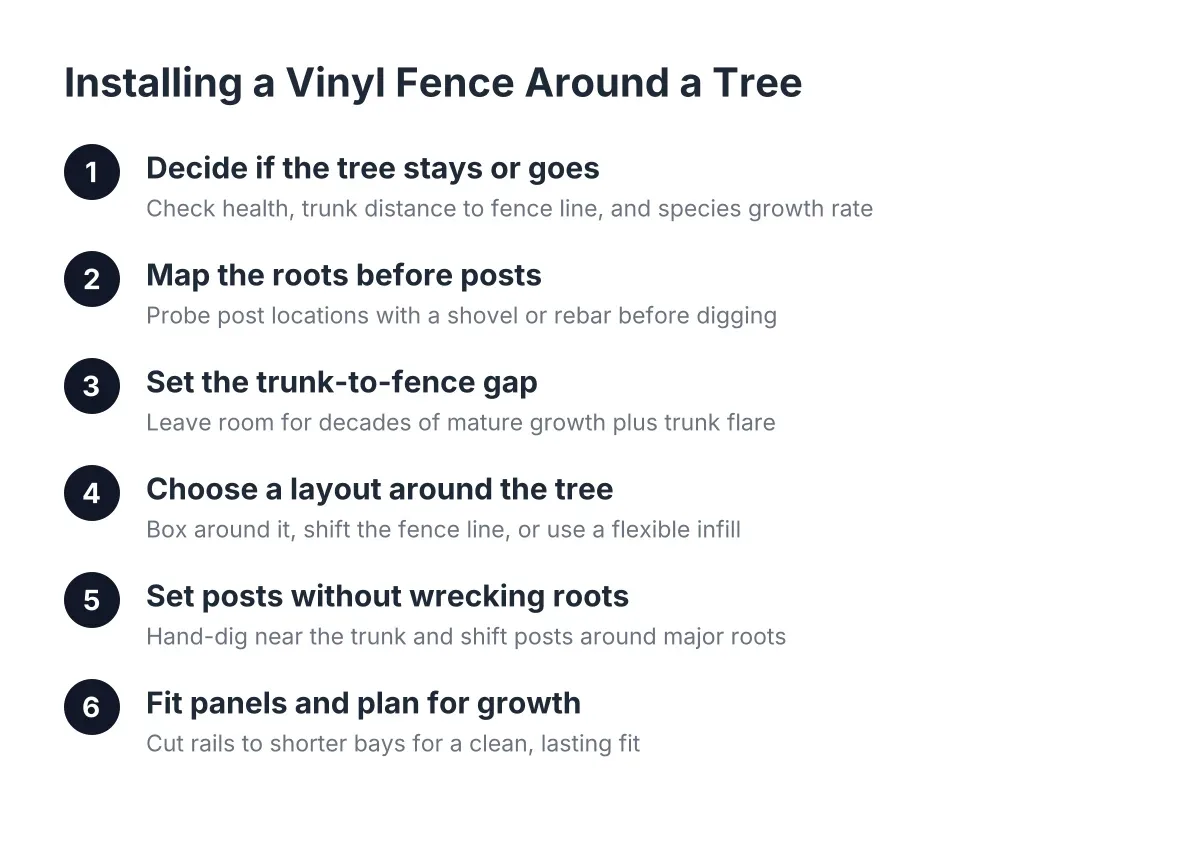
That last technique matters around pools more than people expect. Pool decks, retaining walls, and established trees often leave no room for a full-depth footing. A steel-reinforced post sleeved in vinyl keeps the strength without tearing out hardscape. The same trick solves a vinyl fence around a tree without cutting roots that keep the tree standing.
Gate posts deserve the most care of all. A pool gate that sags stops self-latching, and a pool gate that does not latch is a code failure and a liability, not a cosmetic issue. If you manage a property where the pool gate is already dragging or stuck, the usual culprit is a moving post, not the hinge hardware. A fence repair visit that resets the post often costs far less than replacing the gate.
Step 5: Assemble Panels with the Rails Facing the Pool
With posts cured, assembly moves fast. Cut the bottom and top rails to fit snugly between posts, then secure them with the screws made for vinyl rail connections. Panels go together one of two ways: insert the pickets first and cap them with the top rail, or lock the top rail in first and pop pickets in after. Both work; the rail-first method is often easier at the end of a run.
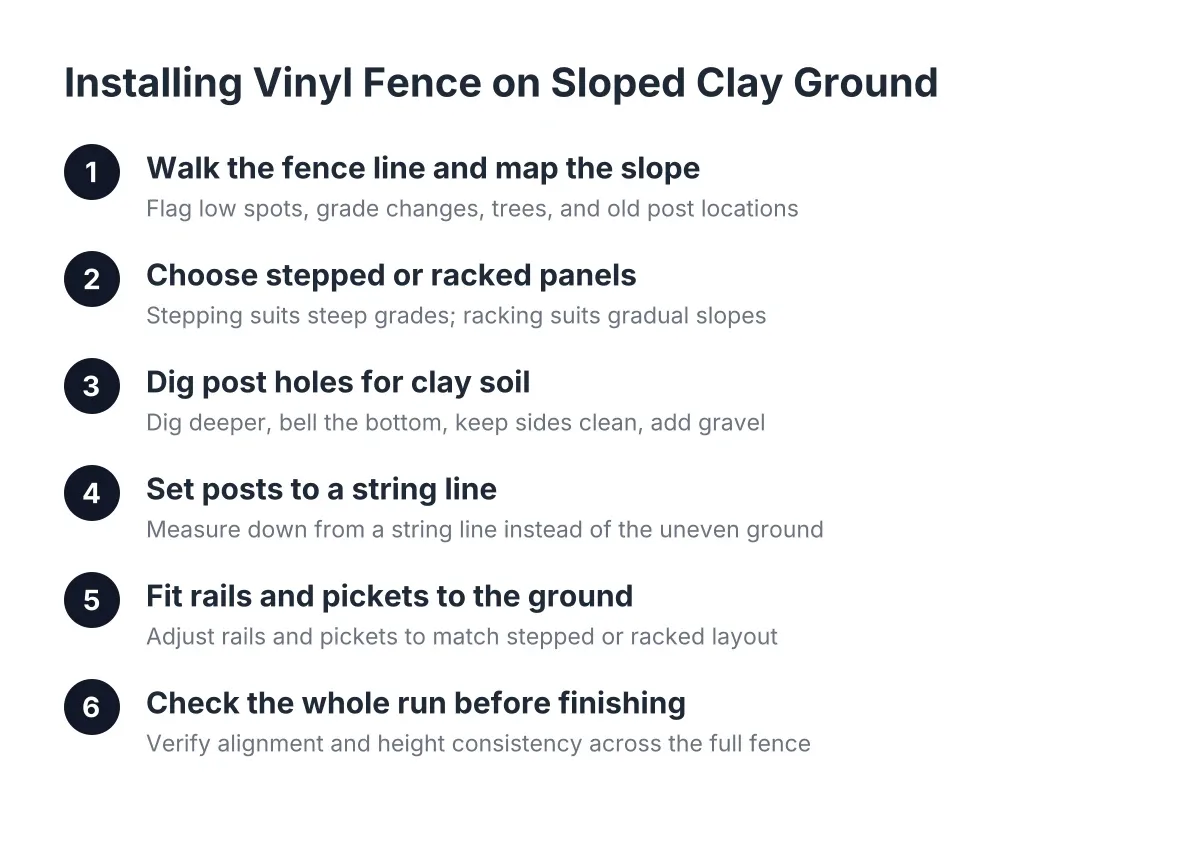
On sloped ground near a pool deck, you do not have to build every panel in the same direction. Reversing the build direction on a downhill section keeps pickets from sliding as you insert them. For deeper detail on grading, see our separate guide on installing vinyl fence on uneven ground; pool projects in Mansfield hit the same clay and slope issues.
Keep checking orientation as you go. Every panel should present its smooth, rail-free face to the outside. One backwards panel next to the gate is exactly the kind of thing a pool inspection catches.
Step 6: Hang the Gate and Test It Like an Inspector Will
Install the gate with self-closing hinges and a self-latching latch mounted at the required height, swinging outward, away from the pool. Then test it the way an inspector will: open it to various angles and let go. It must close and latch on its own every single time, not most of the time.
Suppose a property manager runs a 60-unit community in Mansfield with a pool gate that has been propped open with a brick because the latch quit catching. In that scenario, the property has had no compliant pool barrier for however long that brick has been there, and every day it stays propped is exposure for the board. A gate installation done right, with reinforced posts and hardware rated for constant use, removes that standing risk. If the rest of the fence is sound, a pro can often rebuild just the gate section.
What a Vinyl Fence Around a Pool Involves When You Hire It Out
A full vinyl fence installation around a pool, done by a professional crew, typically covers layout and utility marking, permits where required, post setting in concrete, panel assembly, gate installation with code-compliant hardware, and haul-off of old fencing. Items that often cost extra include removing an existing fence, cutting into or core-drilling a pool deck, steel reinforcement for tight-clearance posts, and a separate enclosure for pool equipment.
On cost, the honest answer is that it depends on fence length, height, gate count, and site conditions like deck penetrations and slope. As a general market reference, HomeAdvisor puts the average cost to install a fence at about $23 per linear foot, with a typical range of $6 to $50 depending on material and labor. Pool projects tend toward the upper half of any range because of taller panels, code-rated gate hardware, and hardscape work. Timeline follows the same drivers; a straightforward backyard pool enclosure is usually a matter of days once materials and permits are in hand, while weather and inspection scheduling can stretch that.
When to DIY and When to Call a Pro
A handy homeowner can manage layout, panel assembly, and even post setting on open, level ground. Call a professional when the project involves a pool barrier inspection, cutting into a pool deck, gates that must self-close reliably, or posts near trees and structures that need steel reinforcement. Call now, not later, if an existing pool gate will not latch; that is a safety failure, not a maintenance item to schedule for next quarter.
How to Choose a Fence Company for Pool Fencing
Ask three questions before you sign anything. First, which pool barrier requirements apply to this address in 2026, and who pulls the permit? A contractor who cannot answer in plain language has not done this work locally. Second, how will posts be set for clay soil, and what happens at the gate posts specifically? Third, what exactly is in the quote: tear-out, haul-off, gate hardware grade, and equipment enclosure, or just panels and posts? A fair quote itemizes those pieces instead of hiding them in one number.
If you are planning a vinyl fence around a pool in Mansfield, or you have a pool gate that stopped latching and needs attention before the next swim season, reach out to Mansfield TX Fence Pros. We will walk the site, explain what drives the price for your specific layout, and give you a straight answer on whether you need a repair, a new gate, or a full enclosure.
If you need vinyl fence installation, Mansfield TX Fence Pros can help.
Prefer to talk it through? Call (817) 383-9360 — a quick call is usually the fastest way to get a straight answer for your situation.