How to Repair Wood Fence Weather Damage From North Texas Heat, Rain, and Ice
North Texas weather does not take it easy on a wood fence. Summer heat bakes the pickets, heavy seasonal rain soaks the bottom rail, and the occasional ice storm snaps brittle boards and strains gate hinges. If you own a fence in Mansfield, wood fence weather damage is less a question of if and more a question of when. The good news: most fence weather damage is repairable in a single weekend or a single crew visit, if you work through the damage in the right order.
This guide walks you through the repair step by step, written for the homeowner who has already decided to fix the fence and wants to do it right the first time. That matters double on a sloped lot or heavy clay soil, where a sloppy repair leans again within a year or two.
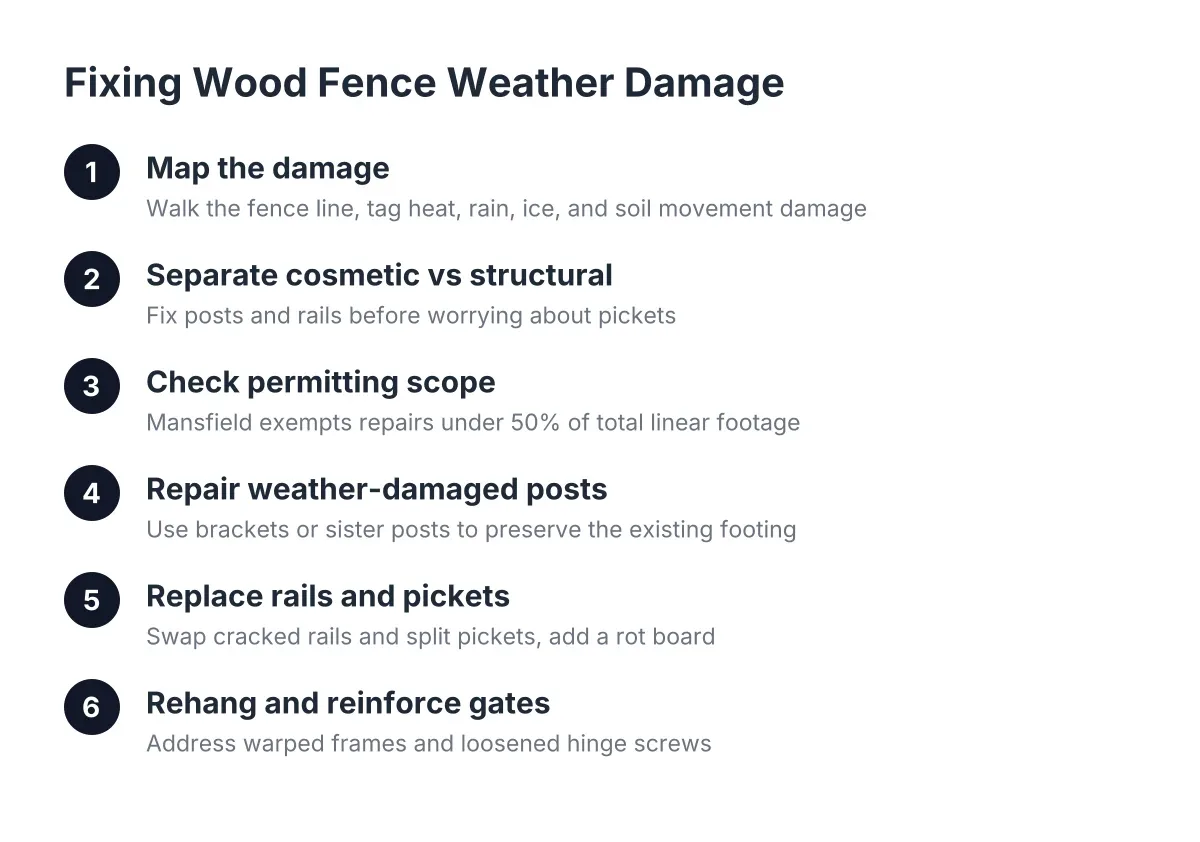
Step 1: Walk the Fence Line and Map Weather Damage and Repairs Needed
Before you buy a single board, walk the full fence line and write down what you find. North Texas weather leaves distinct fingerprints, and each one calls for a different fix.
Look for these specific signs:
- Heat damage: cupped or warped pickets, split board ends, popped nails or screws where wood shrank in summer sun
- Rain and moisture damage: soft or dark wood at the bottom of pickets, green or black staining near the ground, mushy post bases, pooled water along the fence line
- Ice and wind damage: cracked rails, snapped pickets, leaning sections, gates that dropped or no longer latch
- Soil movement damage: posts that heave up, lean, or wobble after a wet season, which is common in Mansfield's clay soils that swell and shrink with moisture swings
Mark each problem spot with painter's tape or spray chalk. Count damaged pickets, rails, and posts separately. That inventory decides everything that follows, including whether this is a repair job or a replacement conversation.
Step 2: Separate Cosmetic Damage From Structural Damage
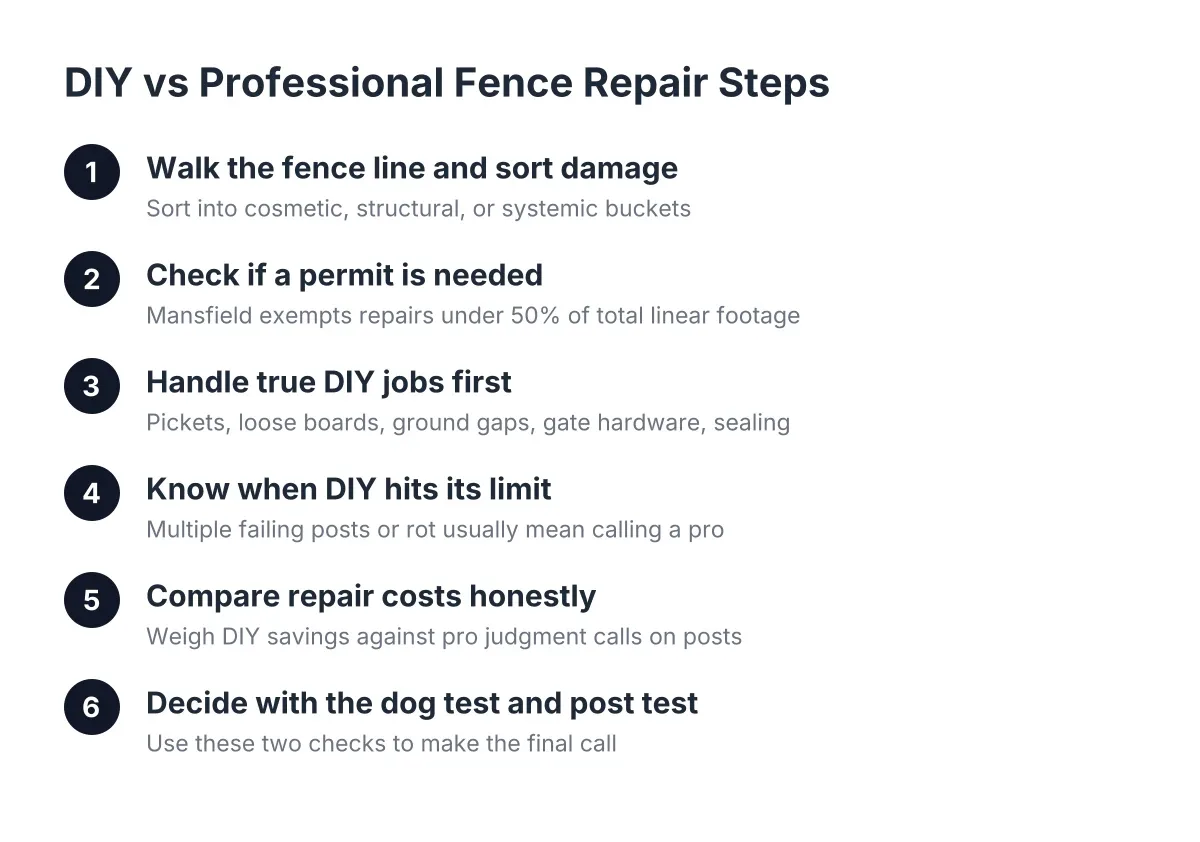
Cosmetic damage lives in the pickets. Structural damage lives in the posts and rails. Fix structure first, always, because new pickets on a failing frame is money thrown into the yard.
Push firmly on each post at chest height. Solid posts barely move. A post that rocks an inch or more either has a rotted base or a footing that clay movement has loosened. Next, sight down each rail. A sagging rail usually means the rail itself cracked or its attachment to the post failed.
As a rough rule, if more than a third of your posts are failing, a full section rebuild or wood fence installation quote is worth pricing against repair. Below that threshold, targeted wood fence repair is usually the cheaper and faster path.
Step 3: Check the Scope Against Mansfield Permitting Rules
Scope affects paperwork, not just price. The City of Mansfield, Texas building code exempts replacement or repair of an existing wood privacy fence from permitting when the work covers less than 50% of the total linear footage of fencing on the property, according to City of Mansfield, Texas.
Therefore, measure what you plan to replace. If your damage inventory from Step 1 stays under that halfway mark, you can move straight to the repair. If a storm took out more than half the fence, plan for the permit process before work starts, and confirm current requirements with the city, since rules can change.
Step 4: Fix Weather-Damaged Posts Without Losing the Footing
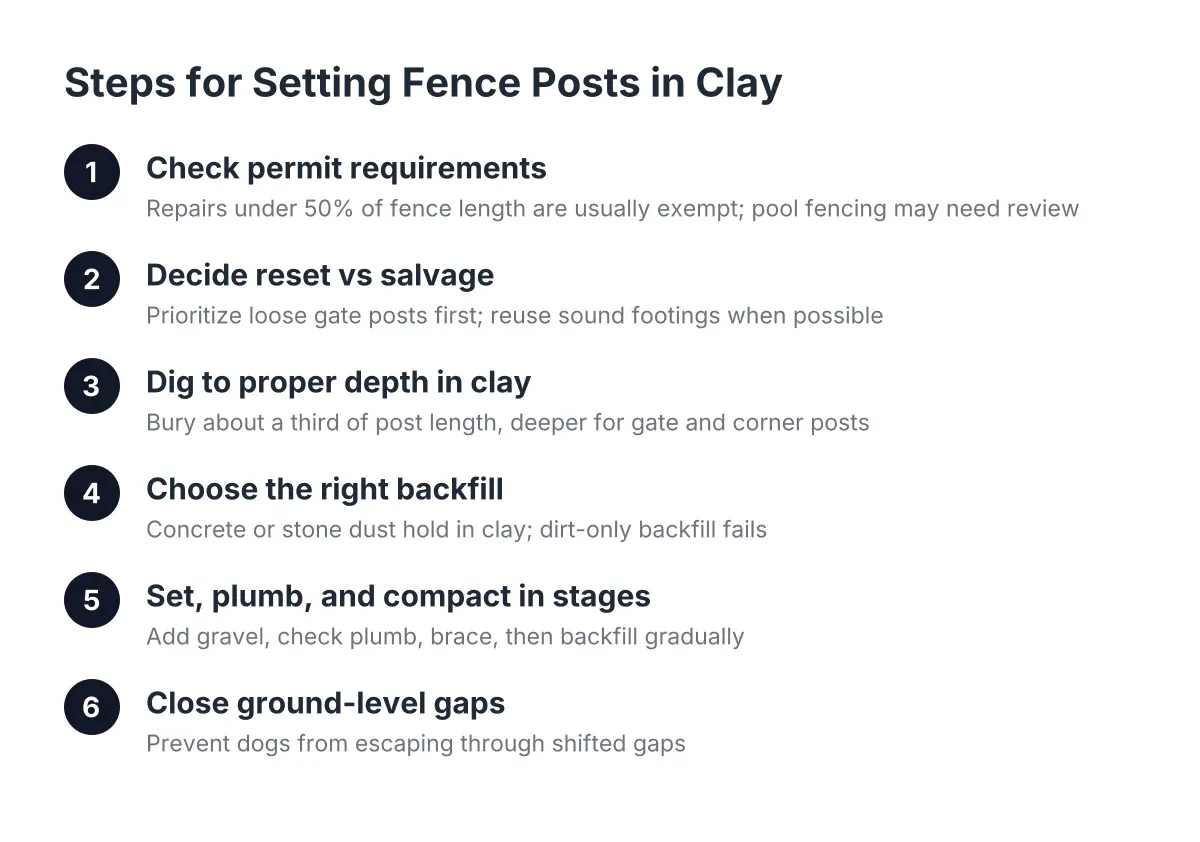
Posts fail at the ground line, where moisture sits against the wood. A common first instinct is to dig out the entire post and its concrete footing and start over. That is not always the most practical move. Breaking out a footing in cured clay is slow, heavy work, and on a sloped yard it can disturb soil you want left alone.
Instead, consider an interim post repair that preserves the existing footing. Steel repair brackets or a sister post can carry the load of a rotted wood post while the original concrete stays in the ground. This approach keeps the fence standing now and lets the eventual full replacement, often with steel posts that resist the warping and rot wood posts are prone to, happen on your schedule instead of after a collapse.
One caution on backfill: concrete poured tight around a wood post can trap moisture against the wood and speed up rot. A well-draining material around the post base sheds water instead of holding it. On lots where water runs along the fence line after heavy rain, drainage around the posts matters as much as the posts themselves.
If several posts have heaved or leaned from clay movement rather than rot, bring in a fence company to assess before you repair. Soil movement is a site condition problem, and fixing the post without addressing drainage or footing depth invites a repeat.
Step 5: Replace Rails and Pickets Damaged by Rain and Ice
With the posts solid, move to the frame and face of the fence. Replace any rail that is cracked, rotted at the post connection, or sagging. Use galvanized or exterior-rated fasteners; ice storms find every rusted nail.
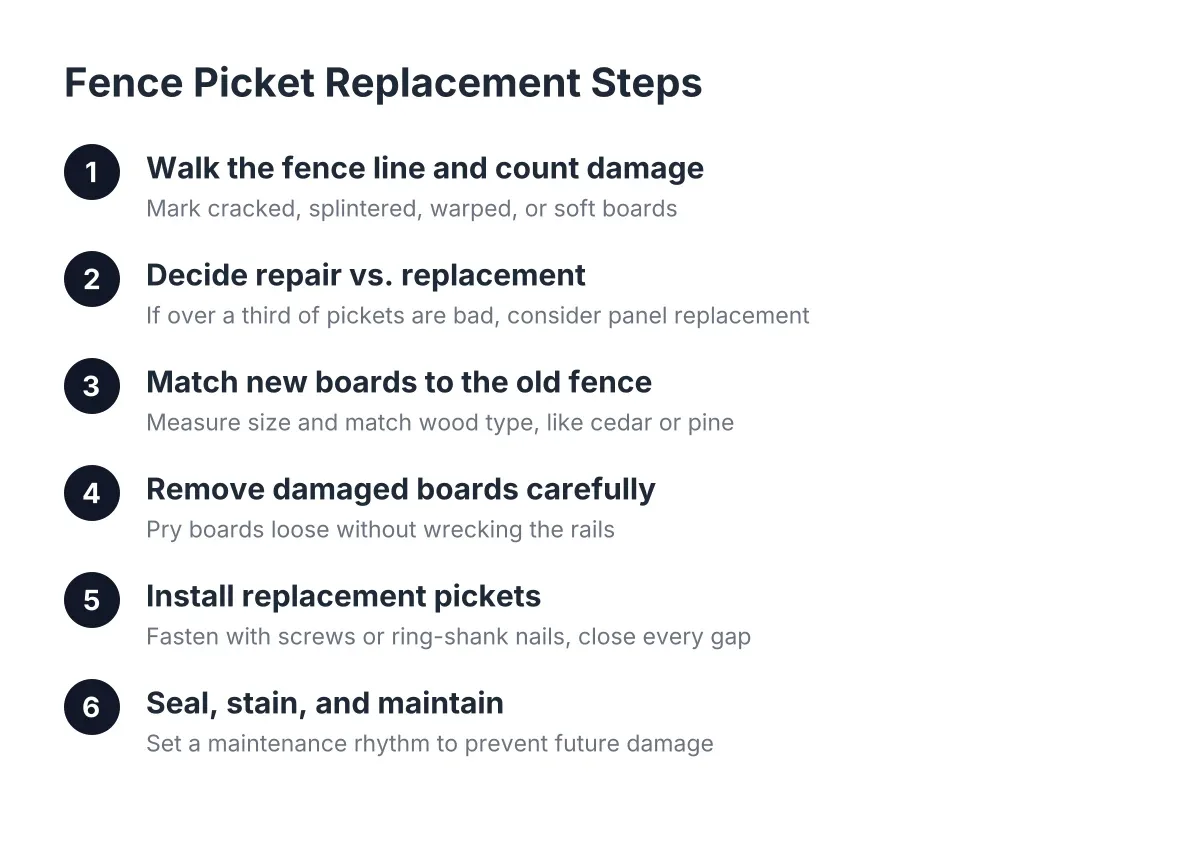
For pickets, replace boards that are split, snapped, or soft at the bottom. Match the species and thickness of the existing fence where you can. New cedar next to weathered cedar will look mismatched for a season, then blend as it grays.
In addition, add a rot board if the fence does not have one. A pressure-treated pine board run along the bottom of a cedar fence keeps the cedar pickets from wicking up moisture from pooled water. On flat Mansfield lots where rainwater lingers, this one upgrade does more for longevity than almost any other picket-level fix. On sloped lots, step the rot board with the grade so it stays in ground contact where water runs.
Step 6: Rehang and Reinforce Weather-Strained Gates
Gates take weather damage harder than any fence section because they move. Heat warps the gate frame, rain swells it shut, and the freeze-thaw cycle works hinge screws loose.
Work through the gate in this order:
- Check the hinge post first. A leaning hinge post makes every other gate fix temporary.
- Square the gate frame. Add a diagonal brace or tension cable running from the top hinge corner to the bottom latch corner.
- Replace rusted hinges and latches with heavier exterior-rated hardware.
- Test the swing through its full arc, and confirm the latch catches without lifting the gate.
If the gate still drags after these fixes, the frame itself has racked beyond saving, and a new gate installation on the existing posts is usually the cleaner answer.
Step 7: Seal the Fence Against the Next Round of Weather Damage
Repair without protection just resets the clock on wood fence weather damage. Once new boards have dried, stain the fence, and stain both sides. Coating both faces does more than improve the look from your yard; it meaningfully extends the fence's working life, since weather does not respect property lines.
For example, oil-based stains suit pressure-treated pine and older, weathered fences, where the oil penetrates dried-out grain. Newer cedar may need a drying period before it accepts stain evenly. Whatever product you choose, plan to recoat on a regular cycle rather than waiting for the finish to visibly fail.
A Realistic Fence Weather Damage Repair Scenario for a Standard Mansfield Lot
Suppose a homeowner on a quarter-acre lot comes out after a February ice storm to find two leaning posts, one cracked rail, a dozen snapped pickets, and a sagging gate. In that scenario, the repair order is exactly the steps above: brace or sister the two posts while keeping their footings, replace the rail, swap the pickets, square and rehang the gate, then stain the repaired sections once the wood dries. That is one crew visit for a professional, or two to three weekends for a capable homeowner. Either way, it falls well under the half-the-fence threshold, so no permit enters the picture.
When Wood Fence Weather Damage Points to Replacement Instead
Sometimes repair is the wrong call, and it is worth saying so plainly. If most posts are rotted at grade, if clay movement has shifted multiple footings, or if the fence is old enough that every repaired section highlights three failing ones, replacement wins on cost per year of service.
That decision point is also where material choice reopens. Cedar privacy fence on steel posts handles North Texas weather better than wood on wood. Vinyl fence resists the rot and fading that plague wood, though it is still PVC and has its own limits in extreme heat events. Concrete fence options remove rot from the equation entirely, with their own site-prep considerations on sloped or shifting ground.
However, that is a separate decision from the one this guide covers. If your damage inventory from Step 1 says repair, follow the steps in order: posts, rails, pickets, gate, stain. Structure first, cosmetics second, protection last. And if your lot slopes, drains poorly, or sits on clay that has already moved one fence, have a professional assess the site conditions before you repair; the ground under the fence decides how long the fix lasts.
If you need fence repair, Mansfield TX Fence Pros can help.
Prefer to talk it through? Call (817) 383-9360 — a quick call is usually the fastest way to get a straight answer for your situation.