Gate Installation Terms Explained: A Plain-English Glossary
If you are pricing a new driveway gate or a walk gate in Mansfield, the quotes can read like another language. This gate installation glossary translates the terms you will see so you can read an estimate line by line, ask sharper questions, and spot a thin bid before you sign anything. Each entry starts with a plain definition, then tells you why the term matters for scope and cost. No sales talk, just the words explained.
- Swing Gate: a gate that opens on hinges, like a door
- Sliding Gate: a gate that rolls sideways along the fence line
- Gate Post: the post that carries the gate's weight
- Hinge: the hardware the gate swings on
- Latch: the catch that holds the gate closed
- Drop Rod: a pin that anchors one leaf of a double gate
- Gate Frame: the skeleton that keeps a gate square
- Anti-Sag Kit: cable or brace that fights gate droop
- Gate Opener: the motor that opens a gate automatically
- Swing Arm: the opener's arm that pushes a swing gate
- Access Control: keypads, remotes, and sensors that run an automatic gate
- Safety Loop: a buried sensor that detects a vehicle at the gate
- Post Setting: how deep and how the posts go in the ground
- Clearance: the gap between the gate and the ground
- Site Prep: grading and clearing before the gate goes in
- Scope of Work: the written list of what the quote covers
Gate Types and Parts: An Installation Glossary
Most confusion in a gate installation glossary starts with the hardware itself, so the basics come first.
Swing Gate
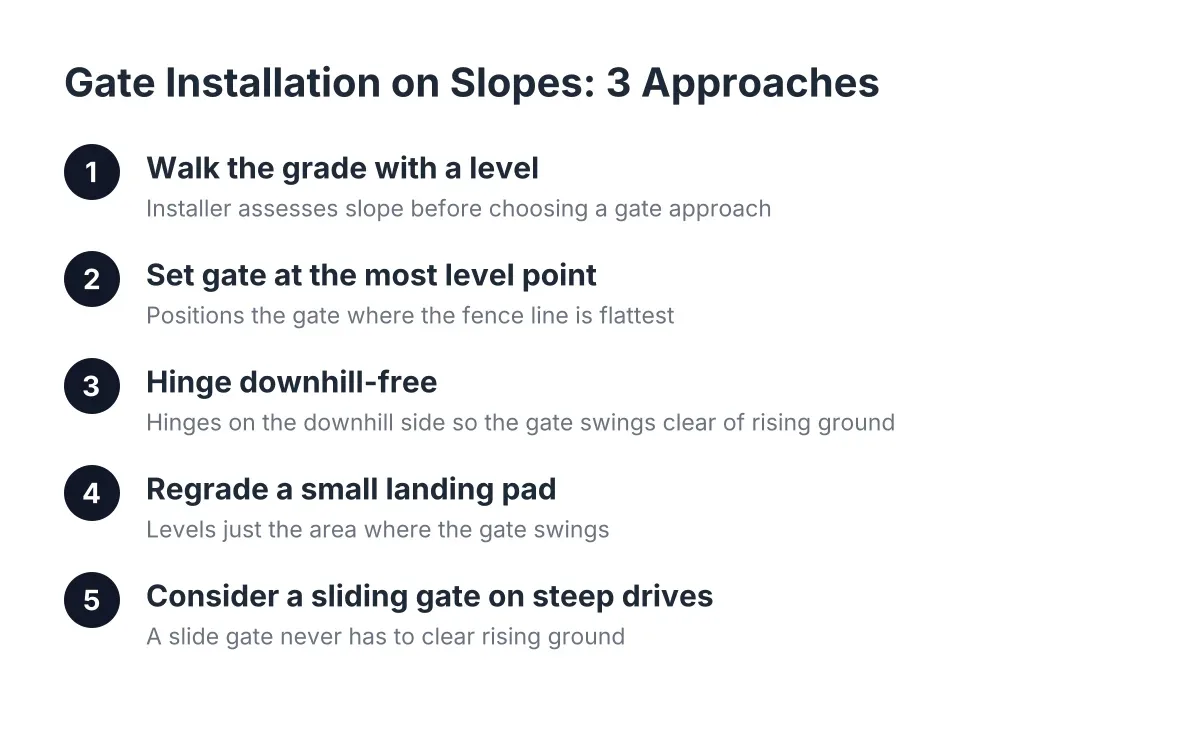
A swing gate is a gate that opens on hinges and swings in an arc, like a door. It is the most common choice for walk gates and many driveway gates because it uses simple hardware. A swing gate needs flat, clear space for its arc, so a sloped driveway or tight parking can rule it out. If your installer asks which way the gate should swing, this is why. For Mansfield yards, soil movement affects the choice too; see rolling gate vs. swing gate in clay soil for the tradeoffs.
Sliding Gate
A sliding gate is a gate that moves sideways along the fence line instead of swinging open. It works well on sloped driveways and in tight spaces where a swinging gate would hit a car or a wall. The tradeoff is that it needs clear room beside the opening for the gate to slide into. Sliding gates use a track or rollers, which adds hardware and usually raises the price compared to a basic swing gate.
Gate Post
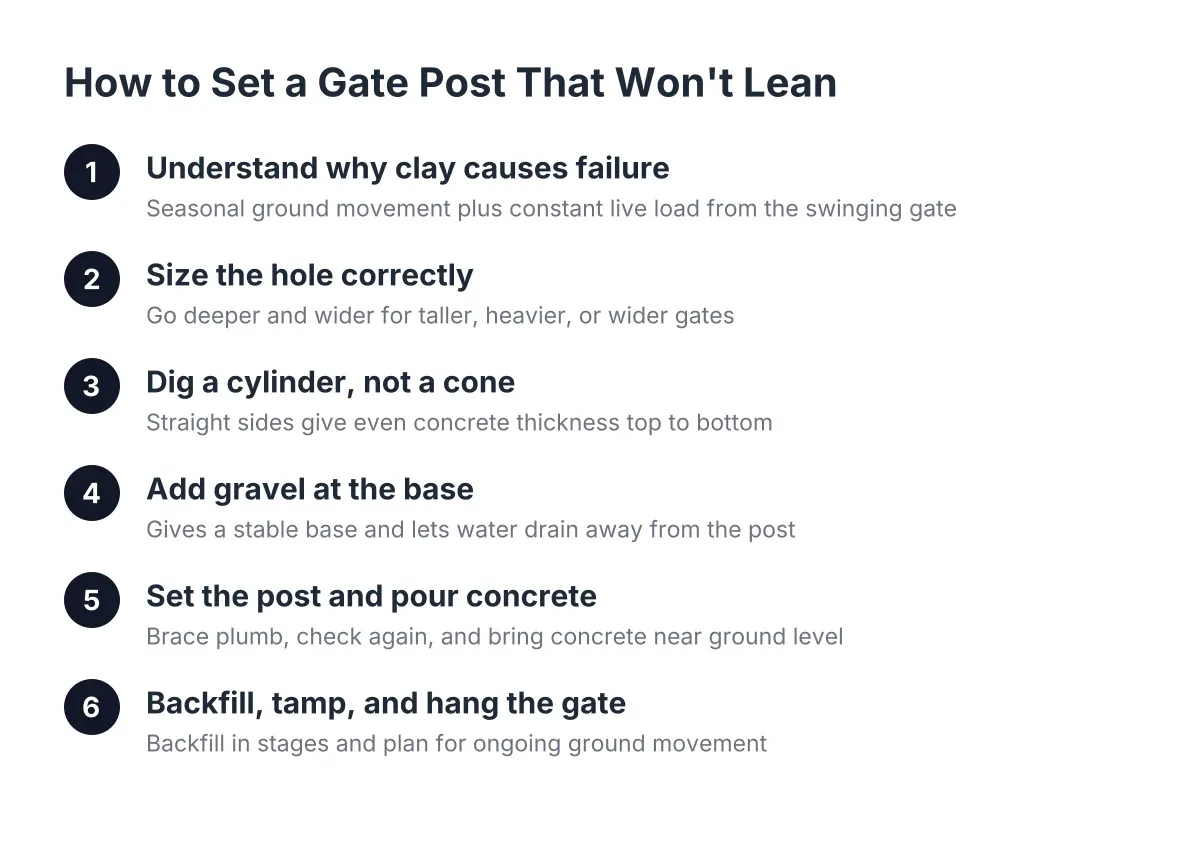
A gate post is the post that carries the full weight of the gate, usually heavier and set deeper than regular fence posts. This is the part that fails first when corners get cut. A gate post that shifts even a little makes the gate drag, bind, or refuse to latch. In North Texas clay, which swells when wet and shrinks when dry, strong gate posts matter more than almost anything else on the job. Ask any bidder how they size and set gate posts; a clear answer is a good sign.
Hinge
A hinge is the hardware a swing gate pivots on, bolted or welded between the gate and its post. Hinge quality decides how long a gate swings smoothly before it starts to sag. Heavier gates, like a solid cedar driveway gate, need heavier hinges, and that shows up as a line item. If a quote lists upgraded or self-closing hinges, the installer is planning for weight and wear, not padding the bill.
Latch
A latch is the catch that holds a gate closed, from a simple gravity hook to a lockable, pool-rated model. The right latch depends on what the gate protects. A backyard with a pool may need a self-latching model to meet safety rules; check your local code. Latches also hint at alignment: a gate that stops latching usually means a post has moved, not that the latch broke.
Drop Rod
A drop rod is a vertical pin on one leaf of a double gate that drops into the ground to hold that side still. With the rod set, the fixed leaf acts like a post for the active leaf to latch against. Double driveway gates need one, so if your quote covers a double gate and no drop rod appears, ask. It is a small part that keeps a wide gate from flapping in the wind.
Gate Frame
A gate frame is the rigid skeleton, usually steel or heavy lumber, that the gate's boards or panels attach to. The frame is what keeps a gate square year after year. A wood gate built without a proper frame will rack into a parallelogram and drag on the ground. When a fence company quotes a steel-framed cedar gate, you are paying for the part you will never see but will feel every time the gate swings true.
Anti-Sag Kit
An anti-sag kit is a diagonal cable or brace with a turnbuckle that pulls a drooping gate corner back into square. It is standard on wider wood gates and a common fix in fence repair. On a new build, an anti-sag kit is cheap insurance against Texas heat and moisture swings working on the lumber. If an older gate drags, this kit is often the first remedy a repair tech will suggest before replacing anything.
Openers and Automation: Gate Installation Glossary Terms
Gate Opener
A gate opener is the motorized unit that opens and closes a gate automatically from a remote, keypad, or phone. Openers are sized by gate weight and length, so a heavy wood driveway gate needs a stronger unit than a light vinyl one. Power matters too: some run on household current, others on solar with a battery. Comparing models is its own project; this gate opener comparison for Mansfield properties walks through what fits where.
Swing Arm
A swing arm is the extending arm on a swing gate opener that pushes the gate open and pulls it shut. The arm mounts between the post and the gate, so it needs sturdy anchoring points on both. If your gate posts or frame are undersized, the opener will loosen them over time. That is why a good installer checks the gate's structure before quoting automation.
Access Control
Access control means the devices that decide who can open an automatic gate: keypads, remotes, card readers, intercoms, or phone apps. Each device is usually a separate line on a quote, which is why two opener bids for the same gate can differ. Think about daily use before you buy. A keypad helps guests and deliveries; remotes suit a household that drives in and out. The electric gate opener installation process shows where these choices come up during planning.
Safety Loop
A safety loop is a wire loop buried in the driveway that senses a vehicle and tells the gate not to close on it. It is a standard safety feature on automated driveway gates, often paired with photo-eye sensors that detect people and pets. Loops get cut into the driveway surface, so they add labor and sometimes concrete work. If an automation quote skips safety devices entirely, ask why before you accept it.
Site, Process, and Paperwork
Post Setting
Post setting means how deep the posts go and what holds them there, usually concrete poured around the post in the hole. For gates, setting depth and concrete matter more than anywhere else on the fence. Mansfield's clay soil shifts with seasonal moisture, and shallow-set gate posts lean first. A bidder who talks about depth and drainage around the post is thinking about year five, not just installation day.
Clearance
Clearance is the gap left between the bottom of the gate and the ground. Too little, and the gate drags after rain swells the wood or the soil heaves. Too much, and pets slip under a privacy fence gate. Sloped ground makes clearance tricky, since a swing gate needs room through its whole arc. This is one reason installers walk the site before giving a firm price.
Site Prep
Site prep means the work done before installation starts: clearing brush, removing an old gate or fence section, grading uneven ground, and locating buried utility lines. Prep is a common source of surprise costs, so a detailed quote names it. Heavy seasonal rain and poor drainage can also change what prep a Mansfield site needs. Ask each bidder what prep is included and what would trigger an extra charge.
Scope of Work
A scope of work is the written section of a quote that lists exactly what the contractor will do, supply, and leave behind. It is your best tool for comparing bids on gate installation, because two prices only mean something when they cover the same work. Check whether posts, concrete, hardware, haul-away, and any opener wiring are listed. For a plain walkthrough of what drives the number itself, see what affects gate installation cost.
Using These Terms
What this gate installation glossary gives you is a working vocabulary: you can now read a quote line by line, ask why a gate post is sized the way it is, and notice when a bid leaves out site prep or safety hardware. When you are ready to compare options for your own yard, our gate installation service page explains how we approach the work in Mansfield.
If you need gate installation, Mansfield TX Fence Pros can help.
Prefer to talk it through? Call (817) 383-9360 — a quick call is usually the fastest way to get a straight answer for your situation.