Wood Fence Repair Terms Explained: A Plain-English Glossary
If you are getting quotes to fix a leaning or rotting fence, the jargon piles up fast. This wood fence repair glossary translates the terms you will hear from contractors into plain English. Use it to read a quote line by line, ask better questions, and spot problems in your own backyard before they get worse. Every definition stands on its own, so you can skim to the term you need.
- Fence post: the vertical backbone of the fence
- Rail (stringer): the horizontal boards pickets attach to
- Picket: the individual vertical fence board
- Post cap: the cover that protects the top of a post
- Kickboard (rot board): the sacrificial board along the ground
- Post rot: decay where the post meets soil
- Heaving: posts pushed up by shifting soil
- Leaning fence: a fence out of plumb, usually a post problem
- Gate sag: a gate dropping out of square
- Dry rot: fungal decay that crumbles wood
- Warping and cupping: boards bending from moisture swings
- Post replacement: pulling and resetting a failed post
- Sistering: adding a new post beside a damaged one
- Concrete footing: the buried concrete that anchors a post
- Plumb and level: the straightness checks a repair should pass
- Sealing and staining: finishes that slow weather damage
- Linear foot: how fence length is measured and priced
- Scope of work: the written list of what a repair covers
Parts of a Wood Fence
Most repair quotes name specific parts, so start here. Knowing the difference between a post, a rail, and a picket tells you whether a quote covers a small patch or a structural fix.
Wood Fence Repair Terms: Fence Post
A fence post is the vertical support set into the ground that carries the weight of the entire fence. Posts are the structural backbone; when a post fails, every panel attached to it starts to lean or wobble. Repairs that involve posts cost more than board swaps because they usually mean digging, concrete, and resetting. If a contractor says your posts are fine, the repair will likely be lighter and cheaper in scope.
Rail (Stringer)
A rail, also called a stringer, is the horizontal board that runs between posts and holds the pickets. Most wood fences use two or three rails per section. A sagging or cracked rail lets pickets droop or pull loose, and replacing a rail means removing and reattaching the pickets along it. If a quote lists "new stringers," expect more labor than a simple board replacement.
Picket
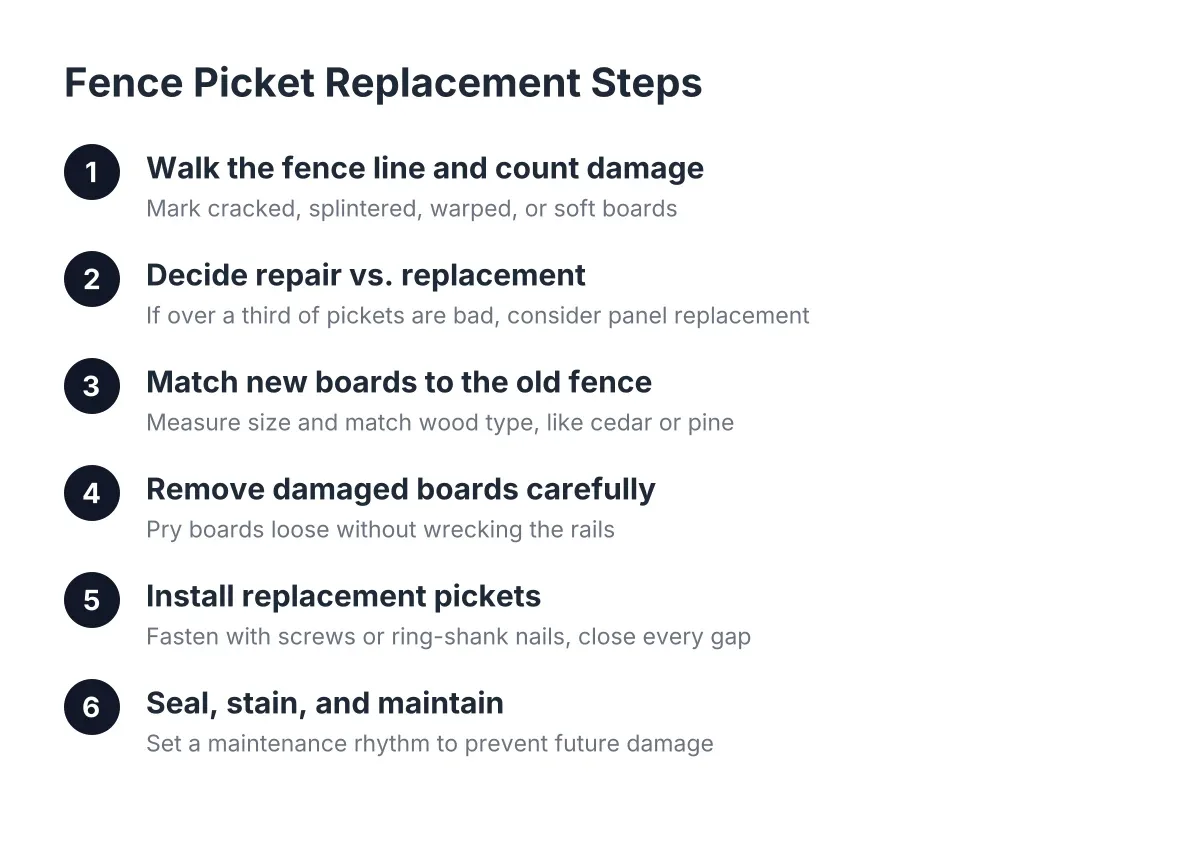
A picket is an individual vertical board nailed or screwed to the rails; it is the part of the fence you actually see. Pickets are the cheapest and easiest part to replace, which is why a few broken boards rarely justify a full rebuild. Matching new pickets to weathered old ones is a cosmetic tradeoff, since fresh wood looks lighter until it ages.
Post Cap
A post cap is a cover, usually wood or metal, that sits on top of a fence post to keep water out of the exposed end grain. Water soaking into the top of a post is a common starting point for rot. Caps are a small line item, but a contractor who mentions them is thinking about how long the repair lasts, not just how it looks on day one.
Kickboard (Rot Board)
A kickboard, sometimes called a rot board, is a horizontal board that runs along the bottom of the fence at ground level. It takes the hit from soil contact, sprinklers, and trimmers so the pickets above it stay dry. The idea is that the kickboard rots first and gets replaced cheaply, protecting the more expensive parts. In North Texas, where heavy seasonal rain pools along fence lines, a kickboard earns its keep.
Common Problems and What They Mean
When a contractor diagnoses your fence, these are the words you will hear. This section covers the failures that drive most wood fence repair calls and glossary terms.
Post Rot
Post rot is decay in a wooden fence post, usually at or just below ground level where wood stays in contact with wet soil. It is the most common reason fences lean or fall. You can often spot it by pushing on the fence; soft, spongy wood at the base is the giveaway. Rotted posts need replacement, not patching, so a diagnosis of post rot changes a quote from minor to structural.
Heaving
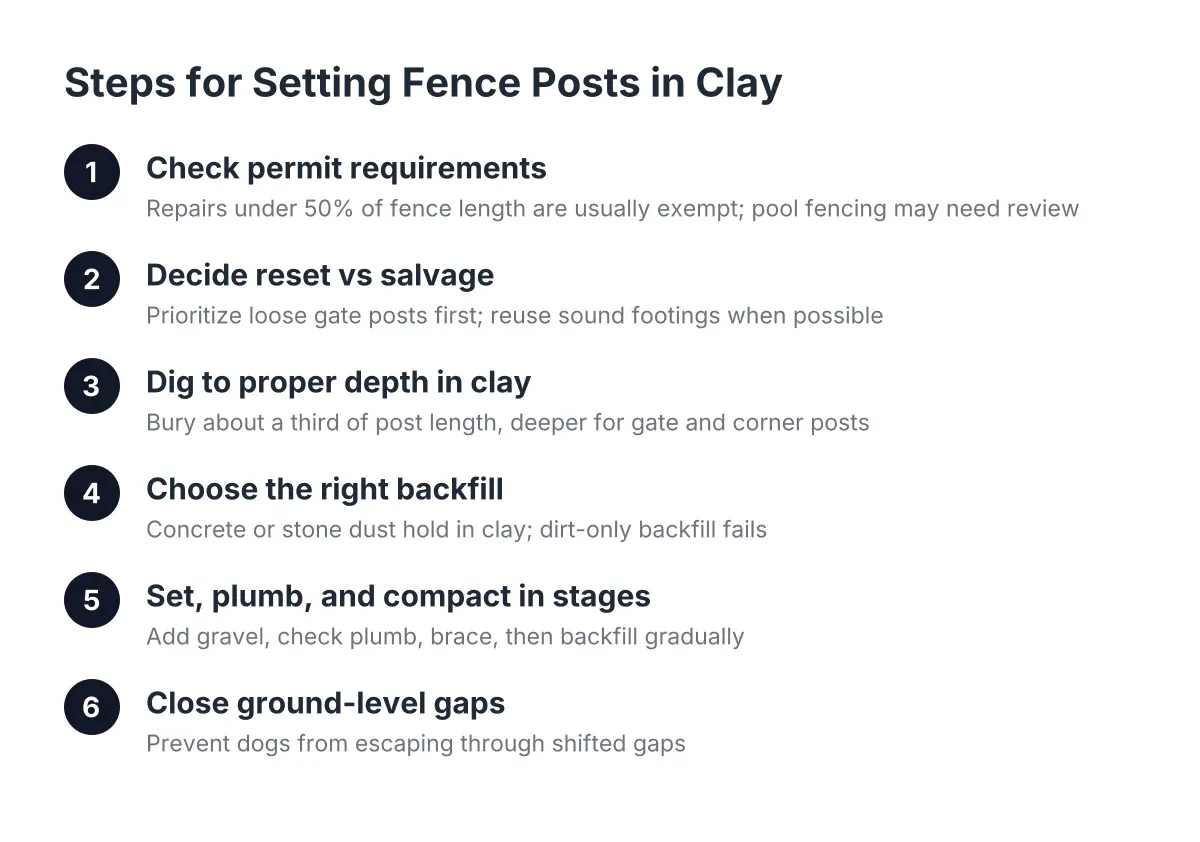
Heaving means soil movement has pushed a fence post and its footing upward or sideways out of position. Clay soils like those around Mansfield swell when wet and shrink when dry, and that cycle grinds against footings season after season. A heaved post can be sound wood that is simply no longer where it should be. Fixing it usually means resetting the post, and sometimes a deeper or wider footing to resist future movement.
Leaning Fence
A leaning fence is a fence section that has tilted out of vertical, almost always because of a post or footing failure rather than the boards themselves. Pushing it straight and bracing it is a temporary fix at best. A lasting repair addresses the cause: rotted posts, loose footings, or soil that has shifted. If a quote only mentions bracing, ask what happens to the lean after the next wet season.
Gate Sag
Gate sag is the gradual drop of a gate's unhinged corner until it drags the ground or no longer latches. Gates fail faster than fence runs because they carry moving weight on two hinges all day. Fixes range from tightening hinges, to adding a diagonal brace or cable, to resetting the hinge post. Gate work is its own line item on most quotes, so expect a contractor handling gate installation or repair to price it separately.
Dry Rot
Dry rot is fungal decay that breaks down the fibers in wood, leaving it brittle, crumbly, and weak even when the surface looks intact. The name misleads; the fungus needs moisture to start, then keeps damaging wood that later dries out. Probe suspect boards with a screwdriver: if the tip sinks in easily, the wood is compromised. Dry rot spreads, so replacing affected boards early protects the boards around them.
Warping and Cupping
Warping and cupping are shape changes in fence boards caused by uneven moisture: warped boards twist or bow along their length, while cupped boards curl across their width. Hot Texas summers followed by soaking rain push boards through exactly the moisture swings that cause this. Mild warping is cosmetic. Boards that have pulled their fasteners loose or opened wide gaps are candidates for replacement.
Glossary of Wood Fence Repair Costs, Fixes, and Paperwork
These terms show up in the quote itself. They tell you what work is actually promised and how the price was built. For a fuller breakdown of what drives price, see our guide on the cost of wood fence repair.
Post Replacement
Post replacement means removing a failed fence post, breaking out or pulling its old concrete footing, and setting a new post in fresh concrete. It is the most labor-intensive common repair because the old footing has to come out of the ground. The number of posts being replaced is one of the biggest cost drivers in wood fence repair, so make sure the quote states the count clearly.
Sistering
Sistering is attaching a new post or support alongside a damaged one instead of removing the original. It avoids digging out the old footing, which keeps labor down, but the result depends on how bad the original damage is. Sistering a cracked post can be a sound fix; sistering a rotted post buys time, not a cure. Ask the contractor why they chose sistering over full replacement.
Concrete Footing
A concrete footing is the mass of concrete poured around the buried portion of a fence post to hold it upright and resist soil movement. Footing depth and width matter more in clay soil that shifts with seasonal moisture, which is the normal condition in Mansfield yards. A quote that mentions footings is telling you the repair goes below ground, not just above it.
Plumb and Level
Plumb means perfectly vertical, and level means perfectly horizontal; together they are the basic checks that confirm a fence repair was done straight. Posts should be plumb, and rails should be level or follow the grade evenly. You can check the work yourself by sighting down the fence line after the job. A contractor who talks about plumbing the posts is describing care, not padding the quote.
Sealing and Staining
Sealing and staining are protective finishes applied to wood fencing: stain adds color and some weather resistance, while sealers repel water. Neither stops rot in wood that touches wet soil, but both slow the sun and rain damage that fades, cracks, and warps boards. If a repair quote includes finishing, that is added scope. If it does not, ask how the new wood will be protected.
Linear Foot
A linear foot is a straight-line measurement of fence length along the ground, and it is the standard unit contractors use to measure and price fence work. A 100-foot fence line is 100 linear feet regardless of height, though height changes material cost. Knowing your fence's rough length in linear feet lets you compare quotes on equal footing and sanity-check the measured scope.
Scope of Work
A scope of work is the written section of a quote or contract that lists exactly what the contractor will do: which posts, how many boards, what materials, and what cleanup. It is the single most important part of the paperwork because it defines what you are owed. Vague scopes lead to disputes; a clear one lets you compare bids fairly. If something you discussed is not in the scope, it is not in the job.
Using These Terms
With this wood fence repair glossary in hand, you can read a quote line by line and know whether you are paying for pickets, posts, or footings. You can also ask sharper questions, like why a contractor chose sistering over replacement or whether the footing depth accounts for clay soil. If you are in the Mansfield area and want straight answers about fence repair or gate installation, we are glad to walk your fence line with you.
If you need fence repair, Mansfield TX Fence Pros can help.
Prefer to talk it through? Call (817) 383-9360 — a quick call is usually the fastest way to get a straight answer for your situation.